I've stood three feet from about five hundred couples now, and I can tell you exactly what guests remember afterward: almost never the thing that cost the most. What sticks is a sign that made them laugh, a candid photo someone else took, a handful of petals thrown at the right moment. These seven ideas are the ones I keep seeing done well and done cheap — sometimes both at once — and every one of them survives being copied without turning into a Pinterest fail.
Skip the Seating Chart Entirely
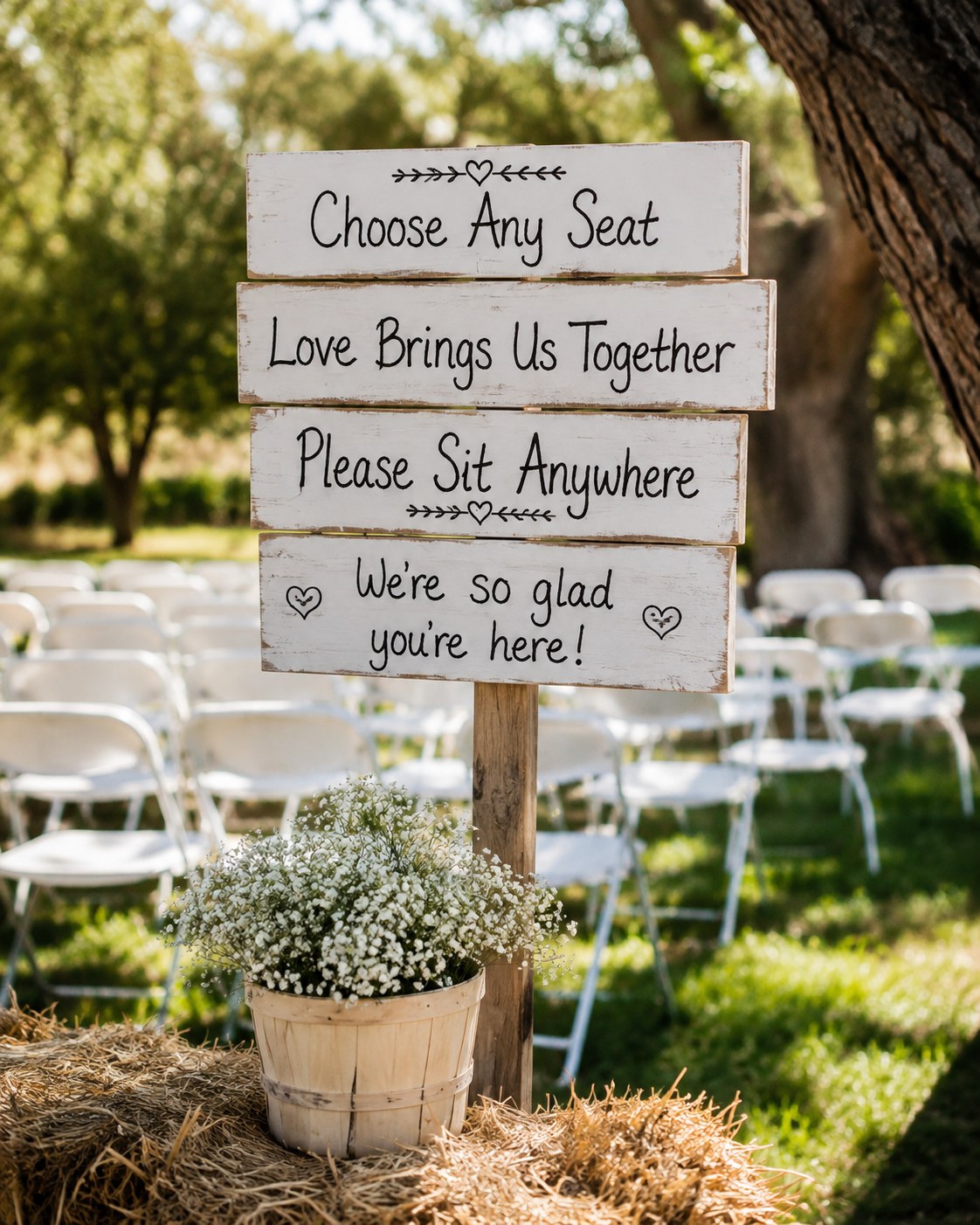
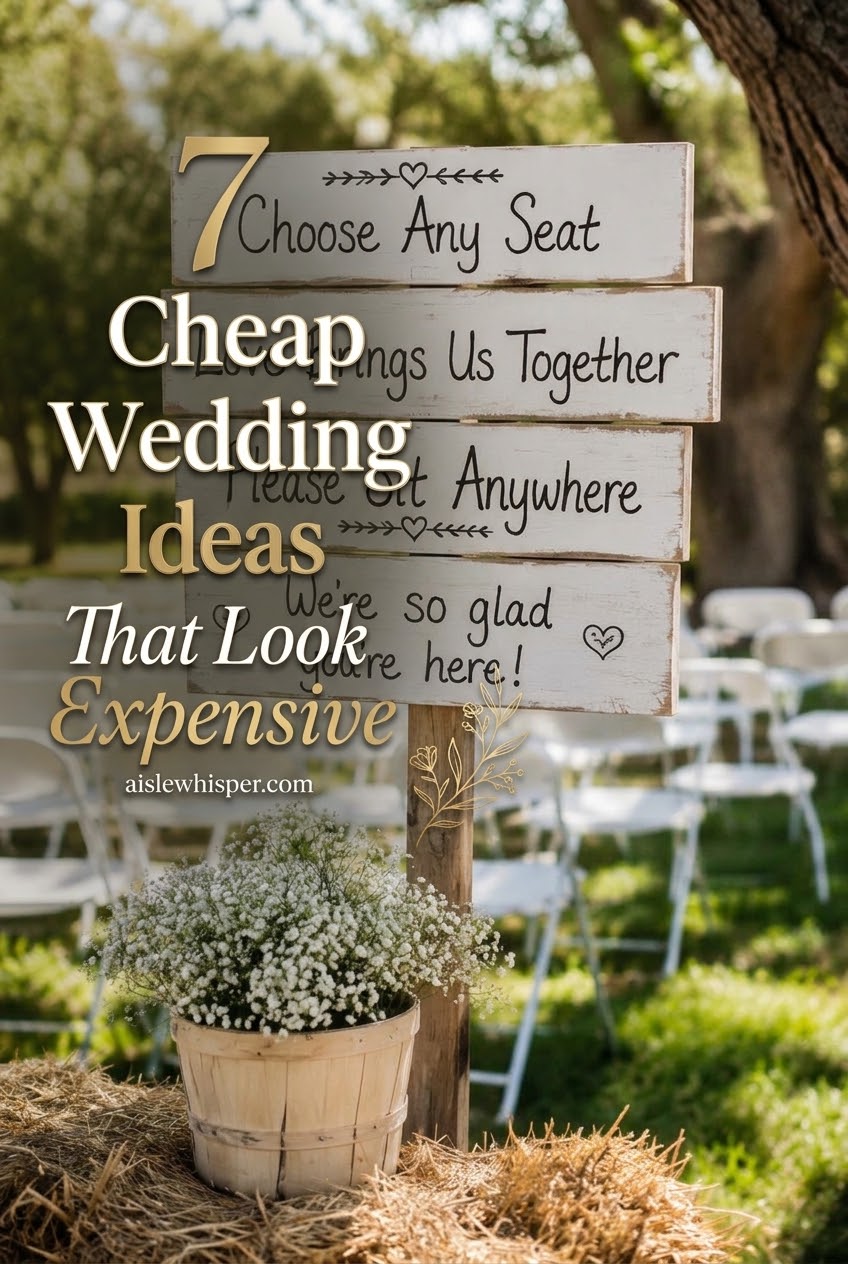
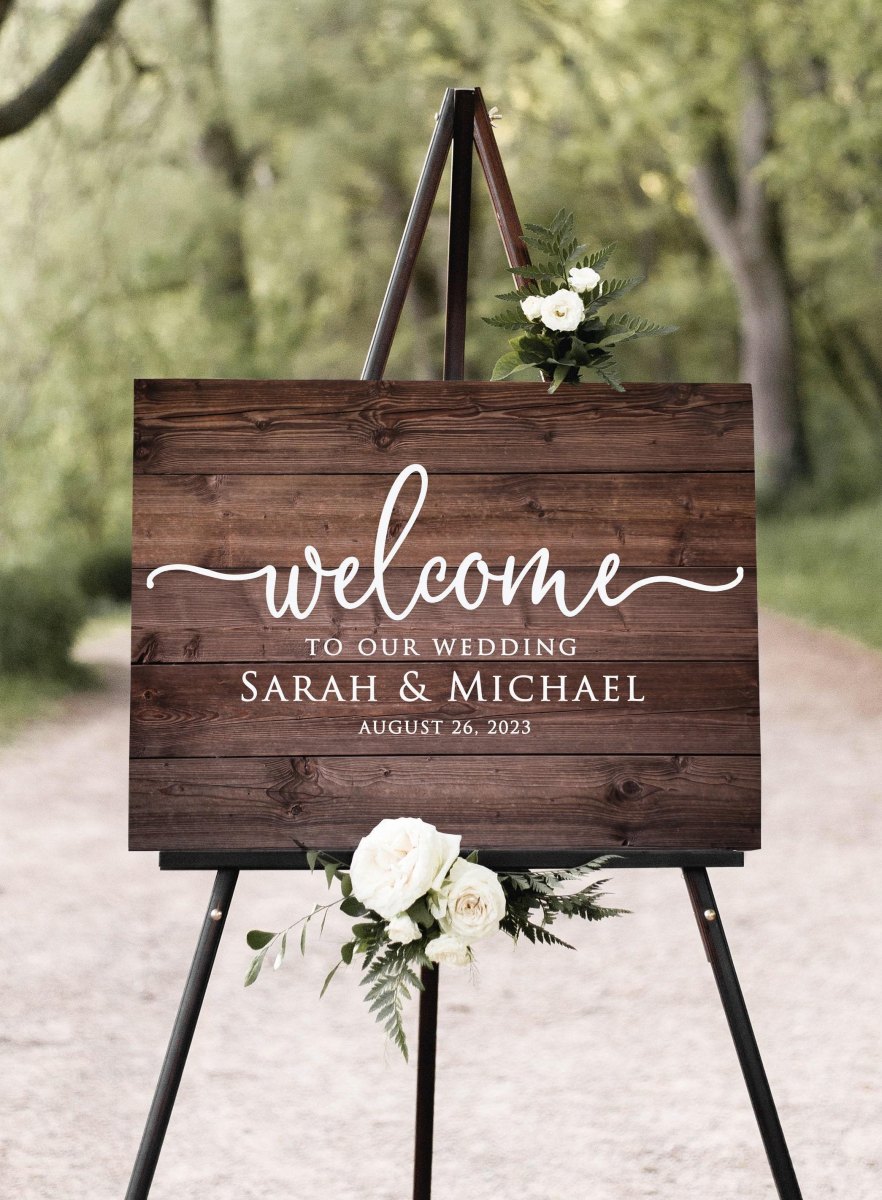
An open-seating sign solves more problems than it looks like it should. I've watched more family drama unfold over 'bride's side, groom's side' than almost anything else at a ceremony — divorced parents who don't want to sit near each other, a blended family that doesn't map onto two neat halves, a guest who just wants to sit near the aisle for their bad knee. A hand-lettered board that says choose any seat, love brings us together ends that negotiation before it starts.
- Cost: a thrifted board and a chalk paint pen, under fifteen dollars, versus a calligrapher's seating chart running into the hundreds.
- Bonus: nobody has to figure out where the officiant's guests go.
If your family situation is tender, this sign is doing quiet diplomatic work, not just saving money.
Borrow a Frame, Skip the Arch Rental
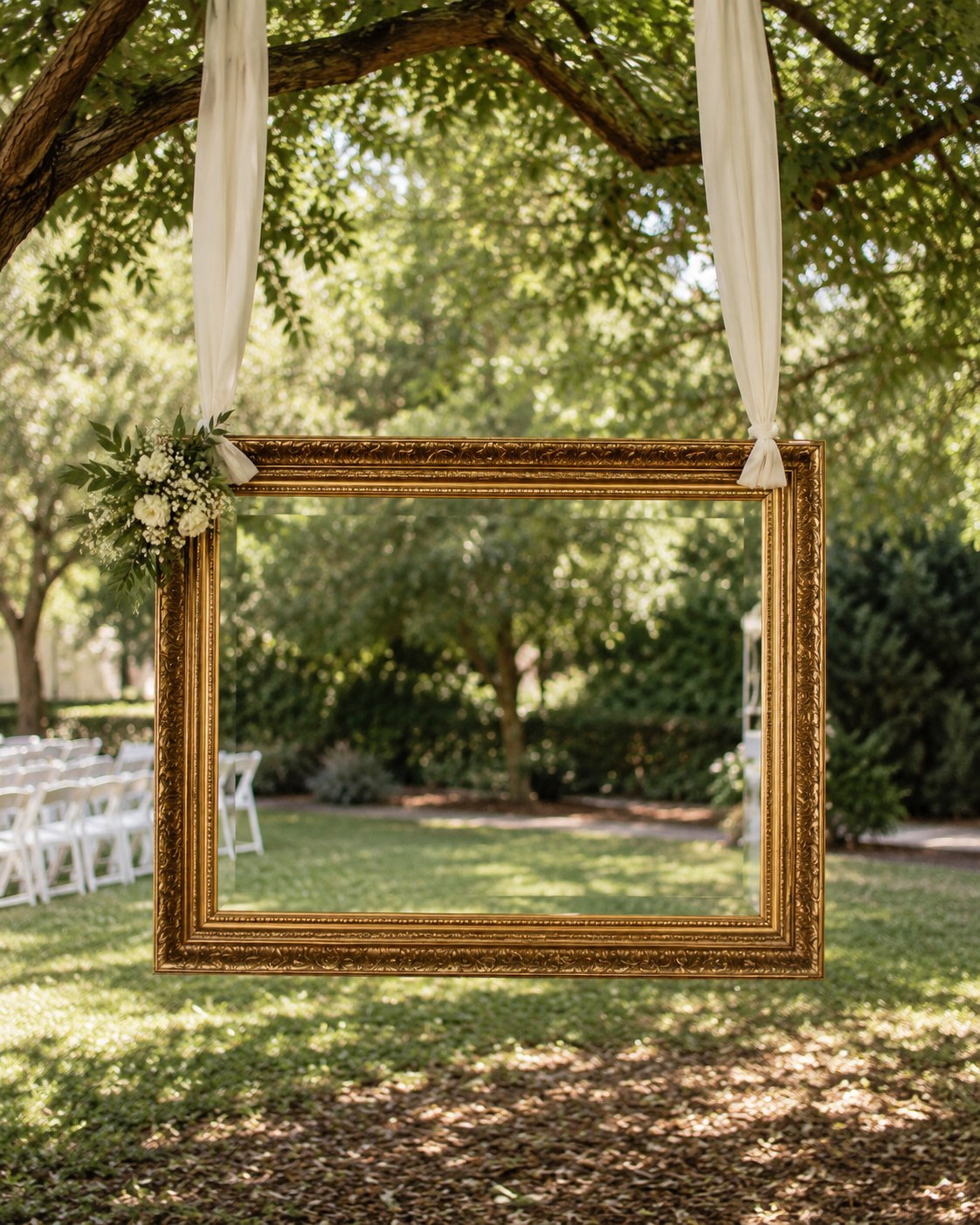
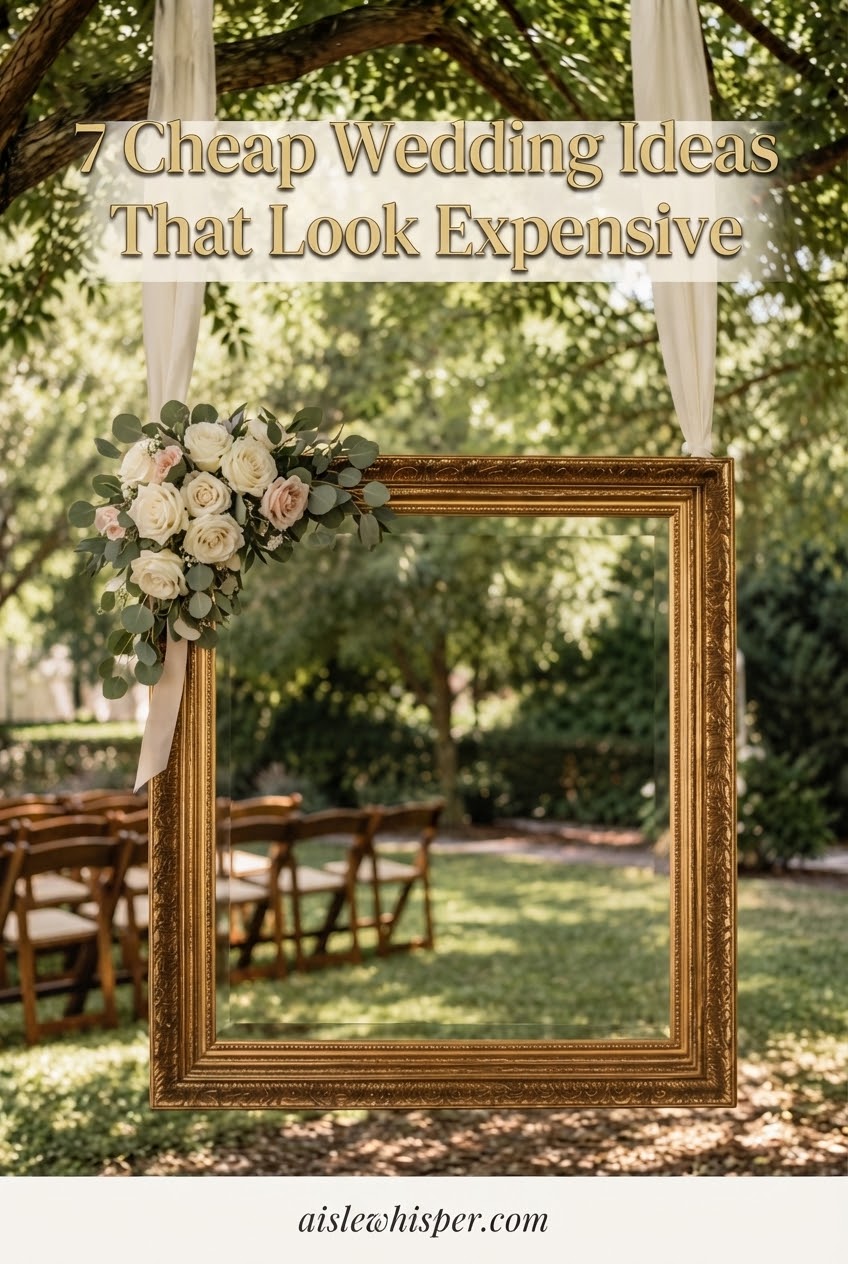
A gold frame hung from a low tree branch does the job of an arch at a fraction of the cost, and it photographs better than most rented arches I've stood under. Thrift stores and estate sales are full of ornate frames nobody wants for a wall anymore; a coat of gold spray paint and a length of ribbon-tied fabric turn it into a genuine focal point.
The couples who lean into what's already on the property — an oak branch, an old frame, a porch post — end up with ceremonies that feel specific to them, not rented for the afternoon.
Practically: check the branch will hold the weight before the morning of, and if you're on someone else's land or a public park, confirm hanging anything from the trees is actually allowed. Some venues and most park agencies have rules about that, and it's worth one phone call rather than one argument on the day.
Hand Guests the Cameras Instead of Renting a Booth
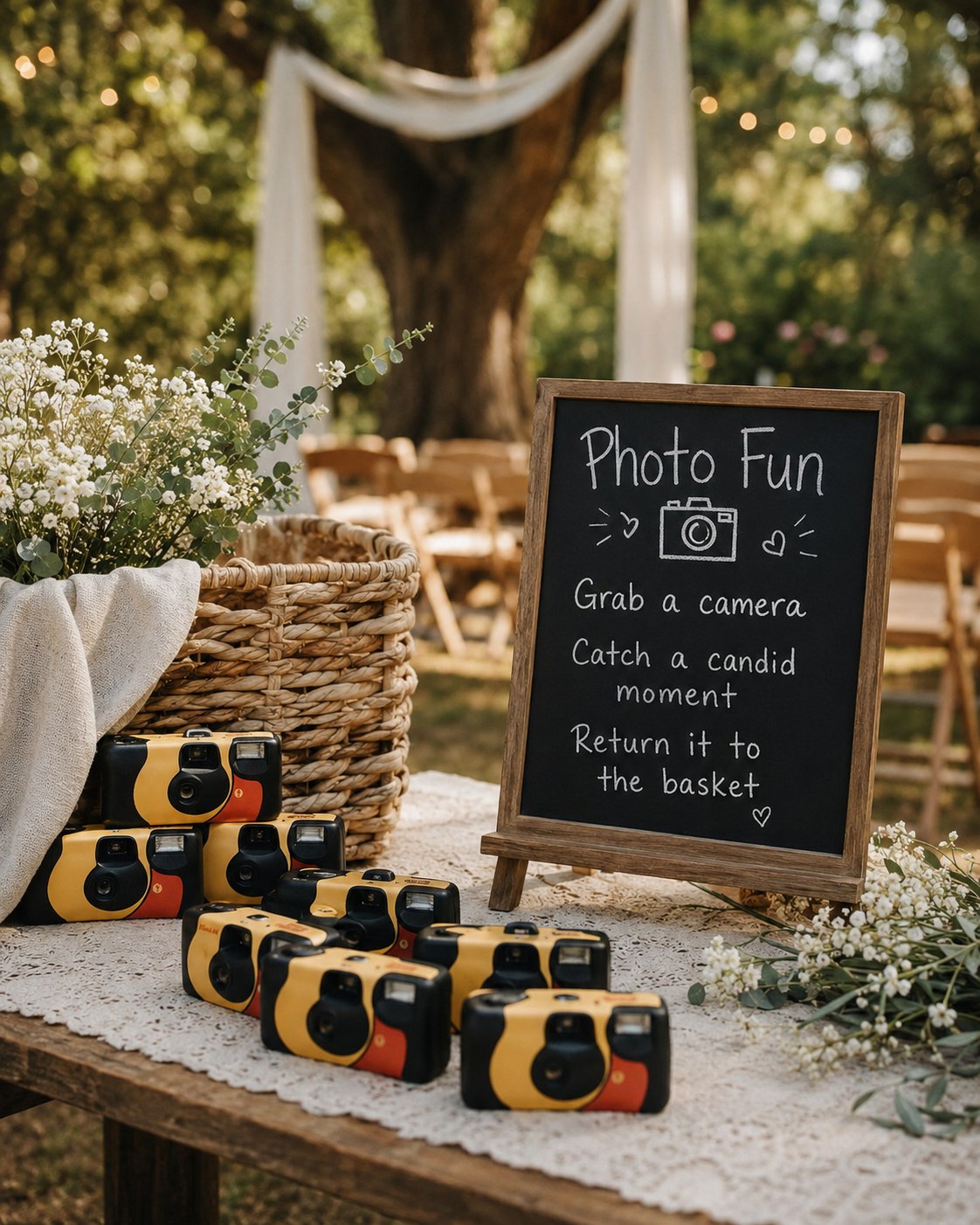
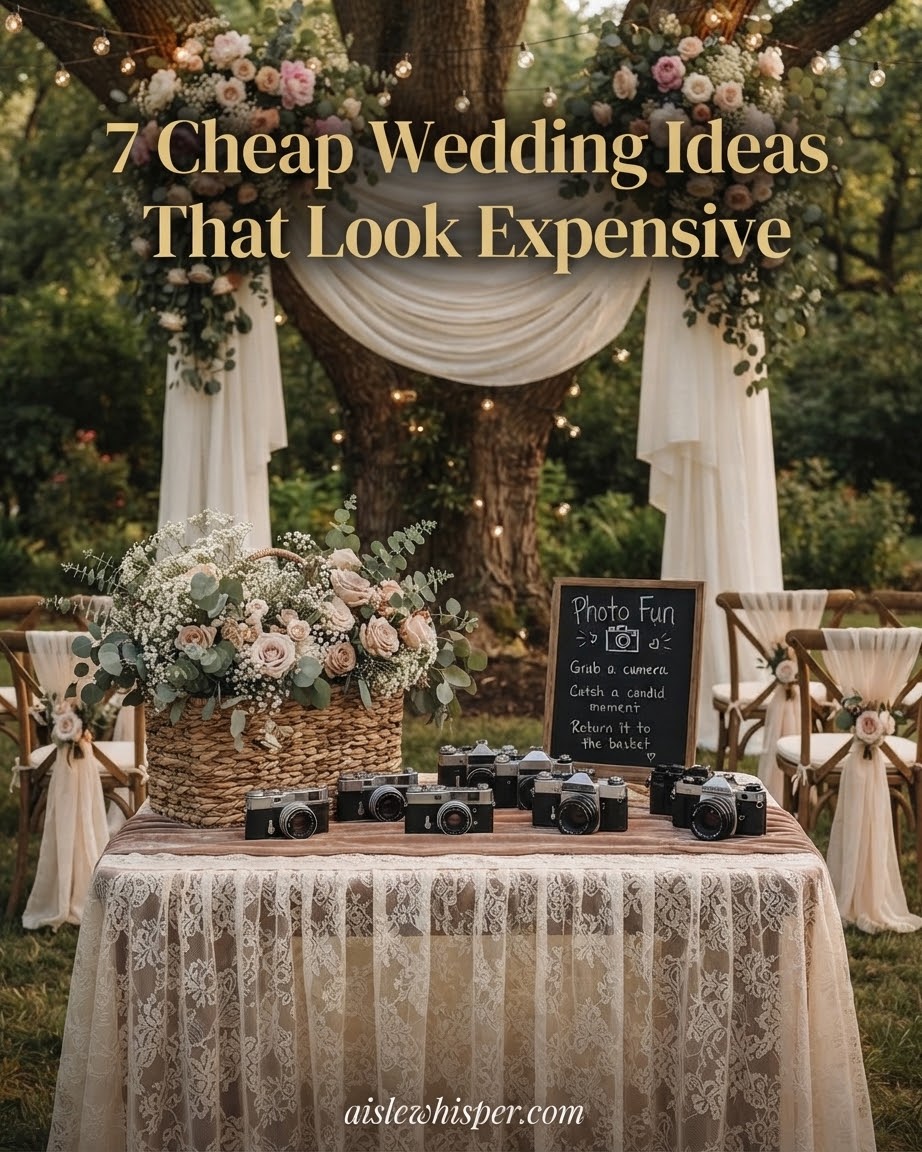
A basket of disposable cameras on a table near the seats will out-produce a rented photo booth for candid material, and it costs a fraction of what a booth attendant charges for a few hours.
- What it captures: the moments your hired photographer isn't near — your uncle mid-laugh, the kids under the dessert table, your own back during the recessional.
- What it costs: disposable cameras run roughly eight to twelve dollars each as of this year, plus developing; ten to fifteen cameras is plenty for most guest counts.
- What it needs: a chalkboard sign with instructions, because half your guests have never loaded a roll of film in their life.
The only real cost trap here is development — get a per-roll quote before you buy the cameras, not after.
Let the Invitation Be the Fun, Not Just the Formality
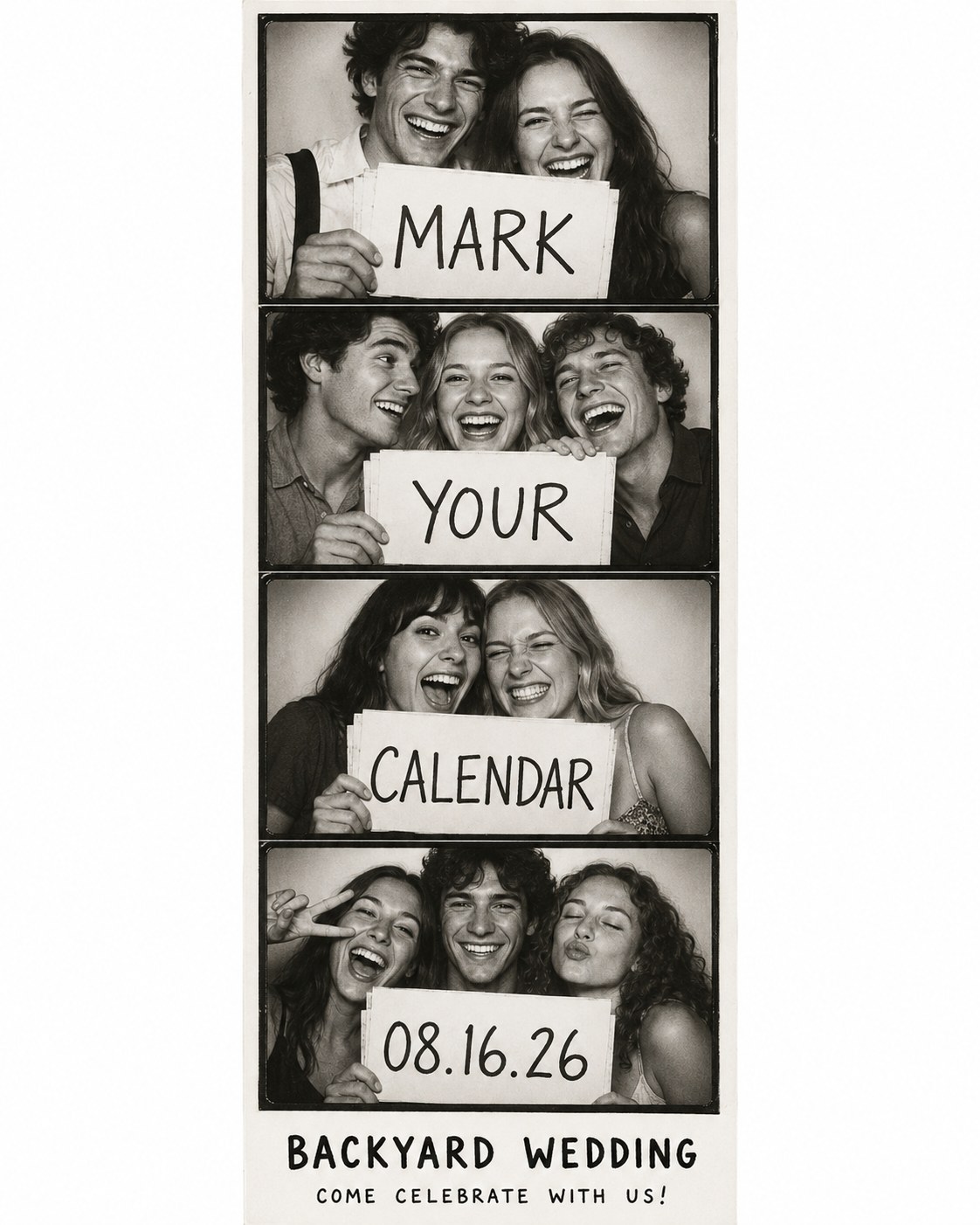
A strip of photo-booth-style shots with 'mark your calendar' spelled across it does more emotional work than a formal card ever will, and it's often cheaper to produce, especially if you go digital first and print only for the guests who need paper. This is the invitation version of the thing I tell couples about their vows: specific beats formal.
A backyard wedding announcement especially benefits from this — if the setting is casual, the invitation can say so before anyone opens the envelope. Save the formal wording for the ceremony program, if you even want one.
Two things I'd flag regardless of how casual the design gets: send save-the-dates early enough for out-of-town guests to book travel, and if you're printing a legal name anywhere on the invitation that you plan to change, don't. Name changes are paperwork for a different professional, not a wedding stationer.
A Painted Mirror Does Double Duty as Decor and Signage
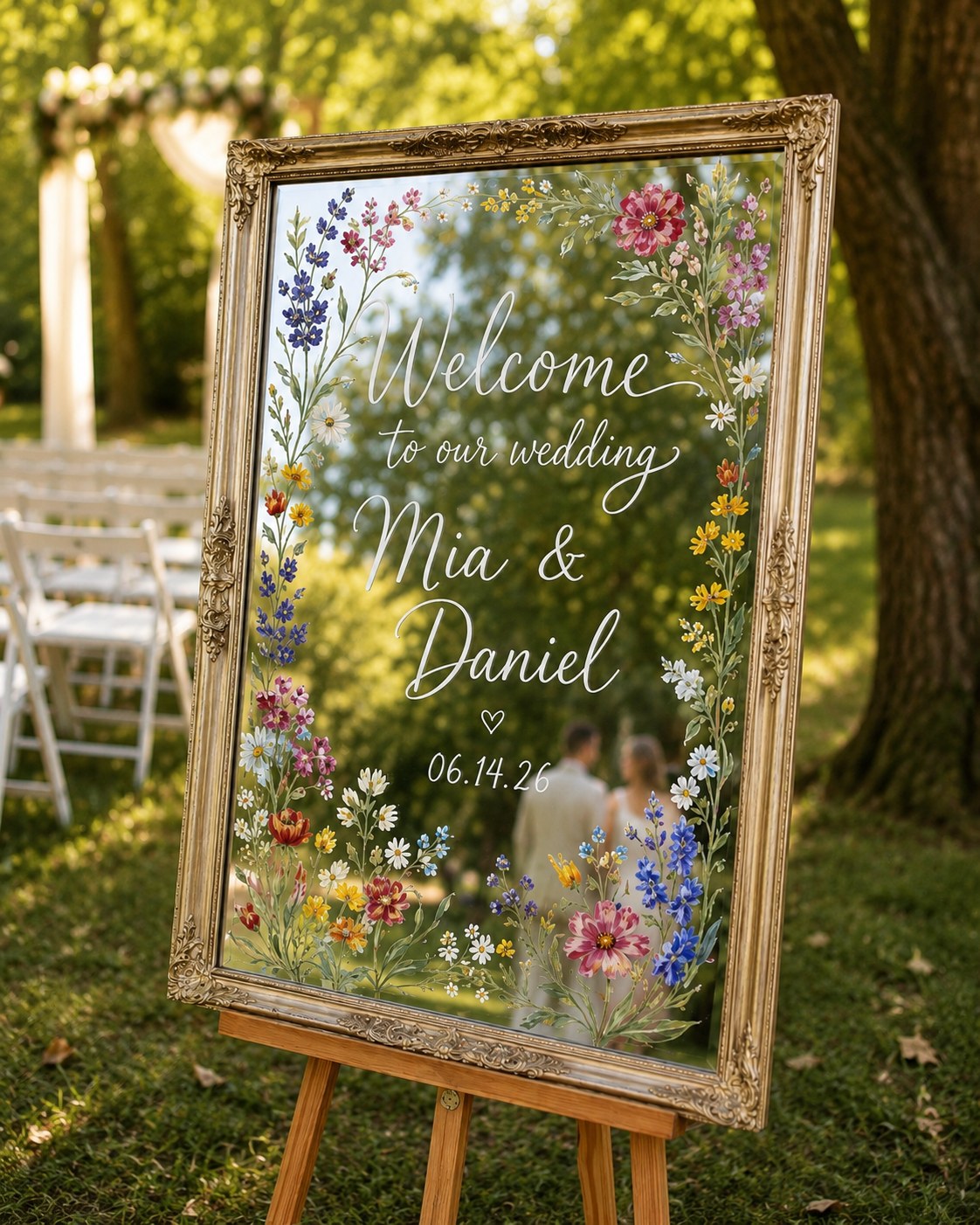
Why a mirror beats a canvas sign
A welcome sign painted directly onto a mirror gives you two things a flat board doesn't: it catches light differently through the day, and it reflects the ceremony behind it, which means it's still doing decorative work even after guests walk past it. Floral vendors and calligraphers charge a premium for these because they take real skill — but a thrifted mirror frame and acrylic paint pens, done over a couple of evenings, gets you most of the way there for a fraction of the cost.
If painting isn't your skill, this is one place I'd actually spend rather than DIY badly — a wobbly, half-finished floral mirror looks worse than a plain printed sign. Get a friend who's actually good at this to do it, or buy the printed vinyl version and skip the paint entirely.
Petal Cones Instead of Confetti or Rice
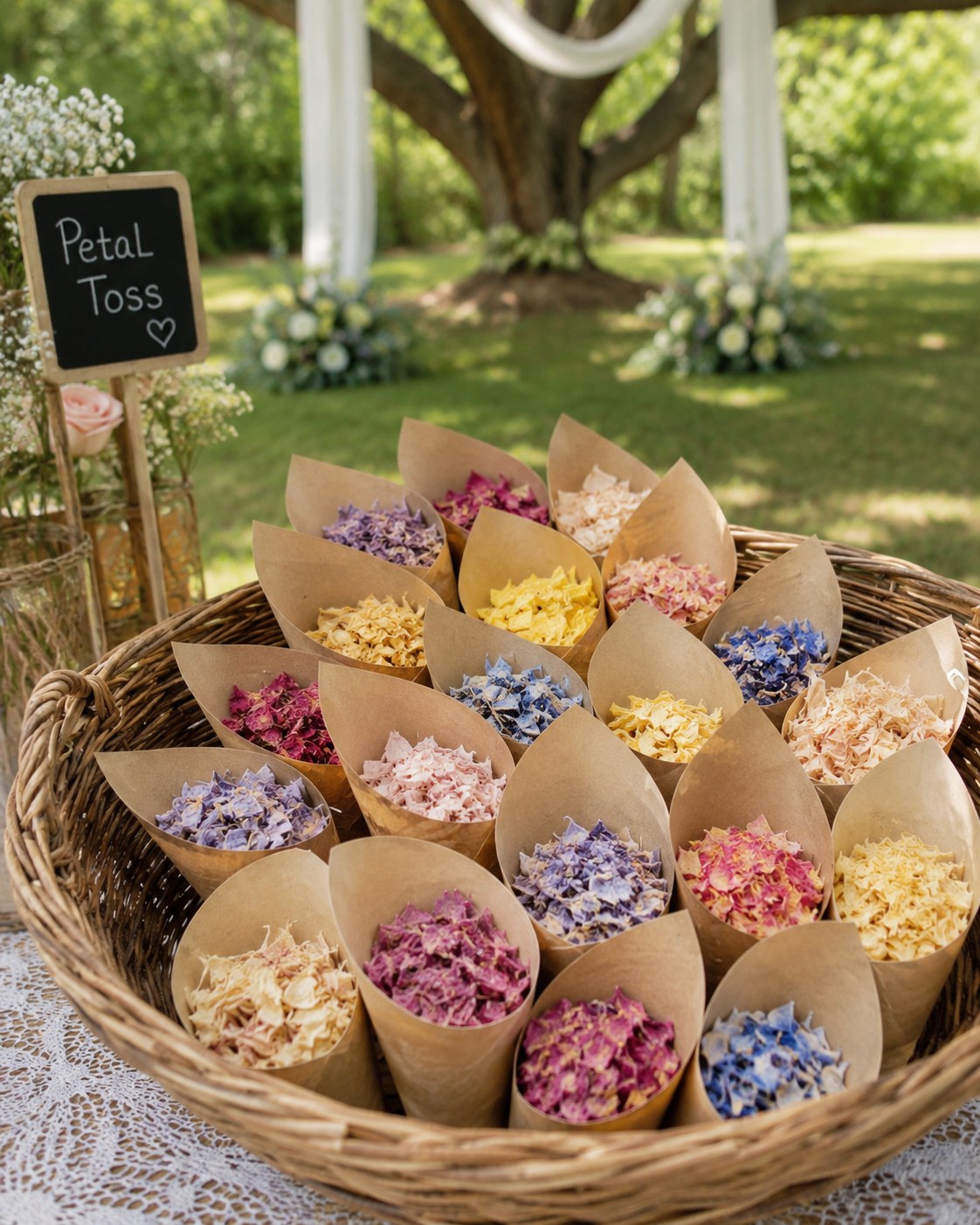
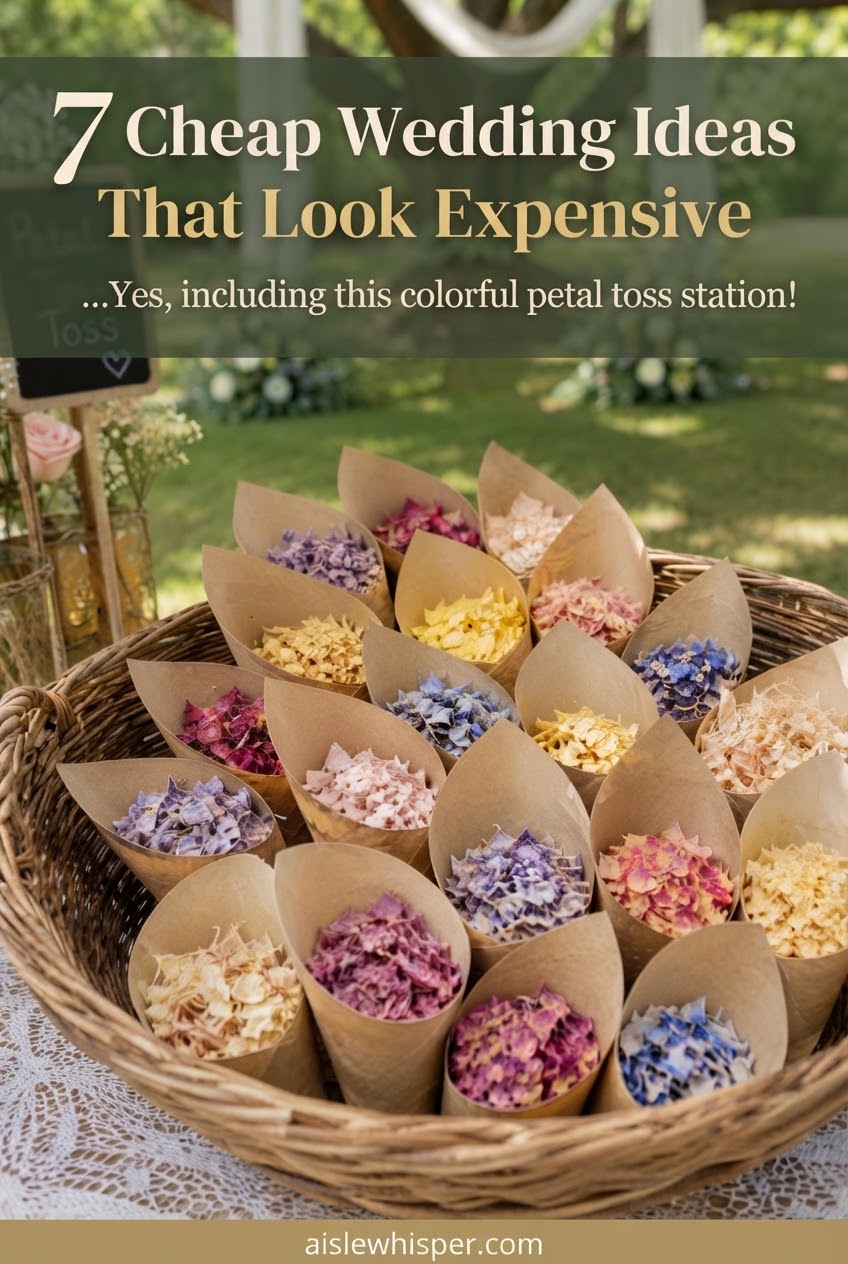
A basket of paper cones filled with dried petals is one of the cheapest ceremony rituals there is, and it photographs beautifully down an aisle in a way that birdseed or rice never has.
- Materials: kraft paper cones (roughly ten cents each in bulk), dried flower petals, a small basket.
- Cost: under fifty dollars for eighty guests, compared to fresh petals shipped for a toss, which run considerably higher.
- Timing: hand them out during processional seating, not after, so nobody's fumbling with a cone during the vows.
One caveat I give every couple planning this outdoors on public land: check with the venue or managing agency before you toss anything, dried or fresh. Some parks and preserves don't allow petal release at all, and it's better to ask than to leave a mess someone else has to clean up.
Let a Tree Be the Whole Ceremony Backdrop
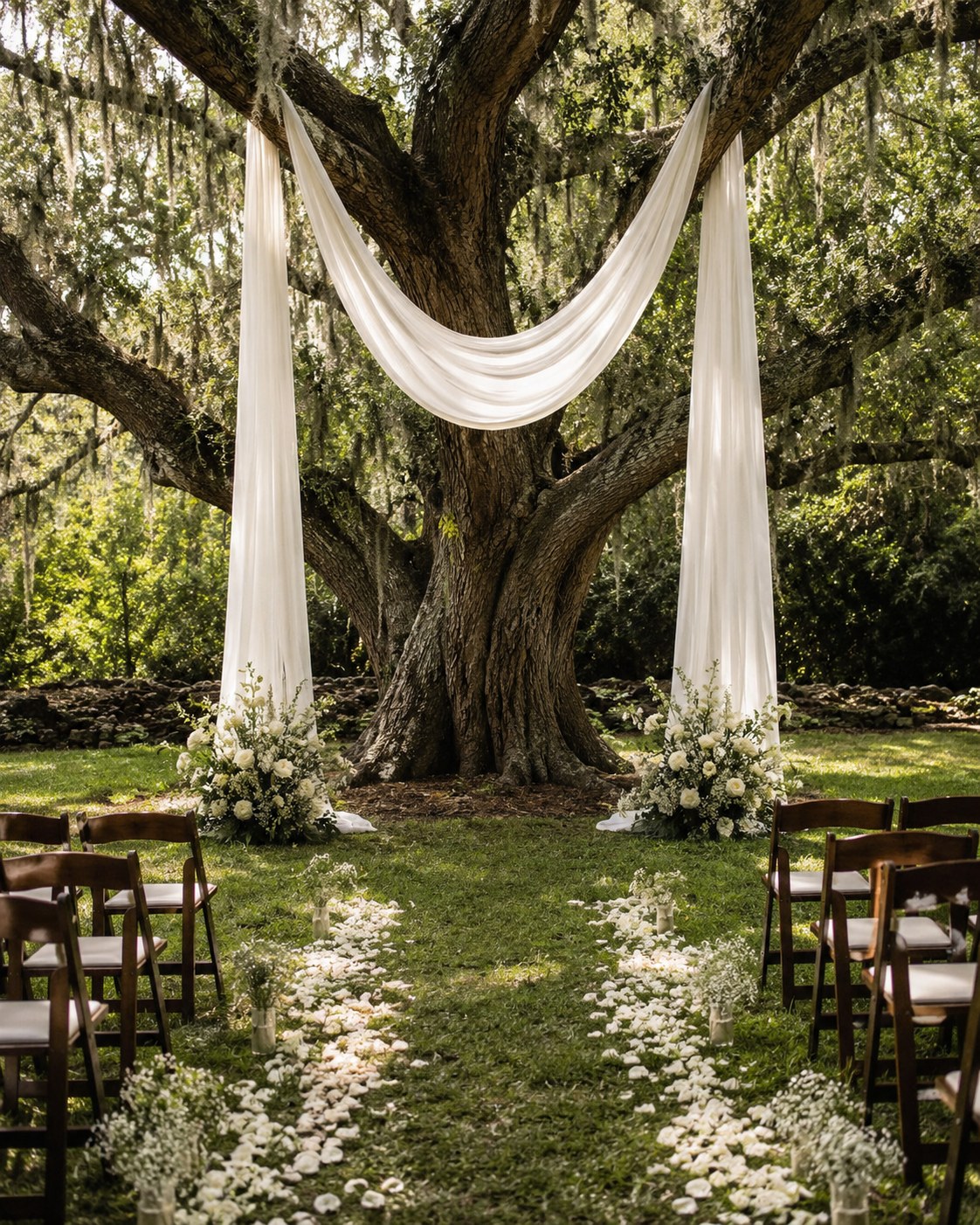
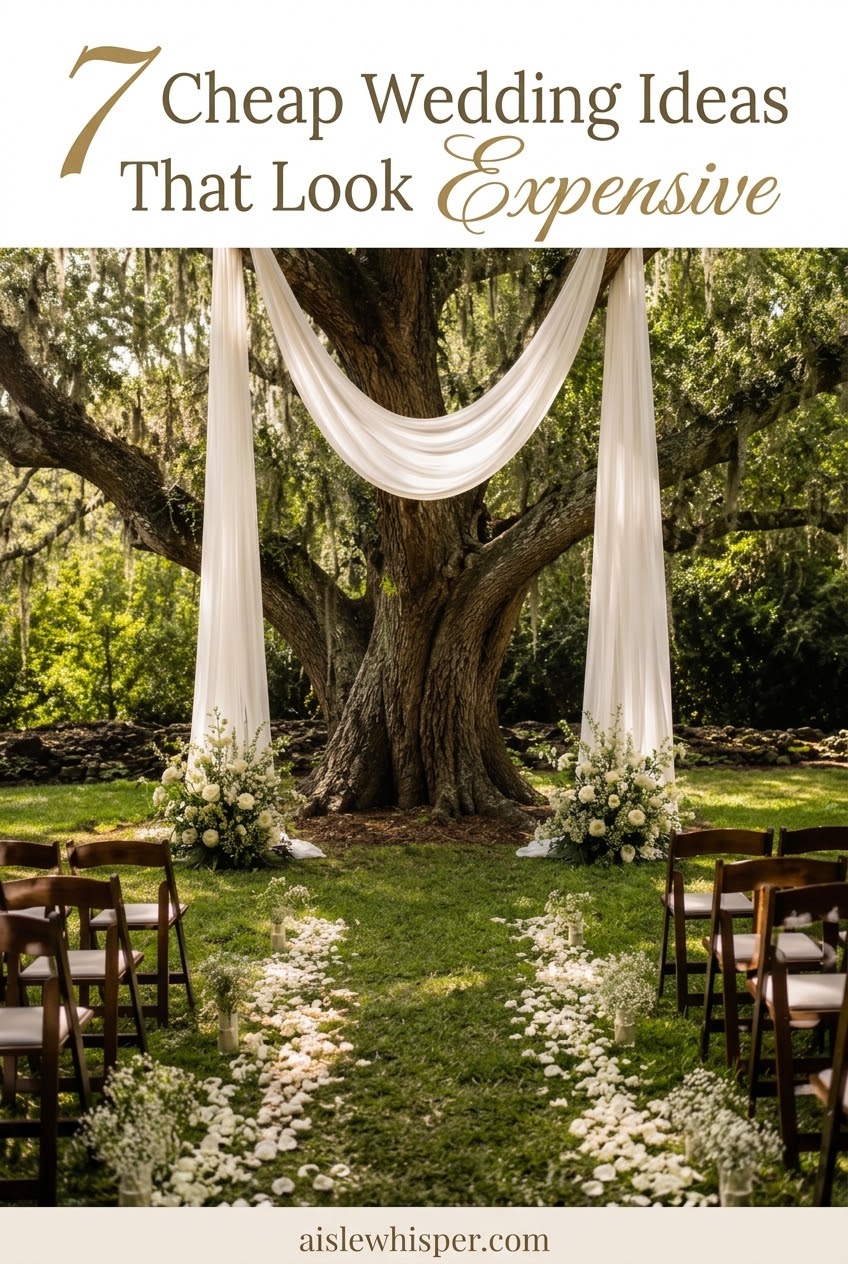
Nothing I've stood under has matched a mature oak with white fabric draped from its branches — and nothing costs less, because the tree is doing ninety percent of the visual work for free. A few yards of inexpensive fabric, some floral clusters at the base, and petals lining the aisle turn an existing tree into the kind of backdrop couples pay thousands for a florist to build from scratch.
The ceremonies I remember most clearly weren't the ones with the biggest floral budget. They were the ones where someone let the location do the talking.
If this tree isn't on your own property, confirm draping fabric on it is permitted — some historic and protected trees have real restrictions. And if you're in a climate like mine, that shade is doing double duty: it's the difference between a ceremony guests can stand through comfortably and one where your grandmother is wilting by the vows. Use it.
None of these seven cost much, and every one of them has made me tear up at a ceremony I officiated — usually not the ones I expected. Spend where it actually changes the day for you, and let the rest be a sign, a basket, or a tree that was already doing the work.

Common Questions
Do these ideas actually save real money, or just look like they do?
Most of them save real money because they replace a rental fee with a one-time purchase — a frame instead of an arch rental, disposable cameras instead of a booth attendant. The mirror sign is the exception: done badly it can cost you more in frustration than it saves, so know your own craft limits before you commit to painting one yourself.
Is it tacky to ask guests to use disposable cameras instead of just their phones?
Not in my experience — guests tend to enjoy having a specific job to do, and disposable cameras produce a different kind of candid than a phone camera does. Just budget for developing costs before the wedding, not after, since that's the part that surprises people.
Can I hang decorations or toss petals at a public park ceremony?
Check with the venue or the managing agency first. I'm not a lawyer or a permitting authority, but I've seen weddings get flagged for exactly this — draping trees or scattering petals in a protected area — so a phone call ahead of time is worth more than an apology after.