
 01.11.2026
Some wedding photographs deserve more than a folder on a phone or a place in an album that gets opened once a year. I've stood beside enough couples during their vows to know that the photographs people treasure most are not always the perfectly posed portraits. Sometimes it's the little glance before the ceremony, a parent's expression in the front row, or the moment everyone finally relaxes and laughs.
I love the idea of bringing those memories into everyday life. A thoughtfully arranged wedding photo display can make a home feel more personal, give a reception space a little history, or create a place to remember the people who helped you get here. And you don't need an elaborate decorating budget to do it.
I've gathered twelve ideas, ranging from traditional framed galleries to playful instant-photo arrangements. Whether you prefer rustic details, clean modern lines, or something sentimental and a little imperfect, there's a way to display your photographs that feels like the two of you.
A few things to consider before you start
- Choose photographs that tell a story rather than displaying every image.
- Consider your home's existing colors, furniture, and available wall space.
- Use suitable hanging hardware and protect valuable prints from direct sunlight.
- Think about whether the display will live at your reception, in your home, or both.
Elegant Wedding Photo Gallery Wall
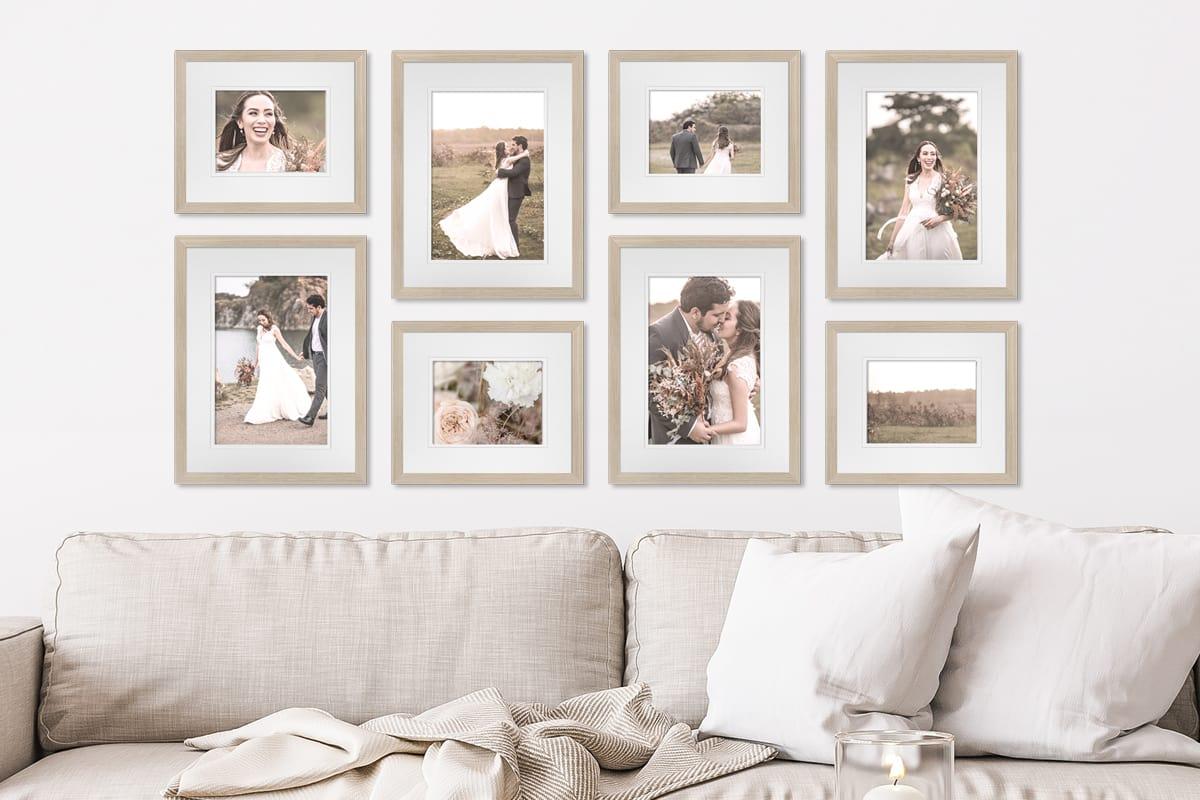
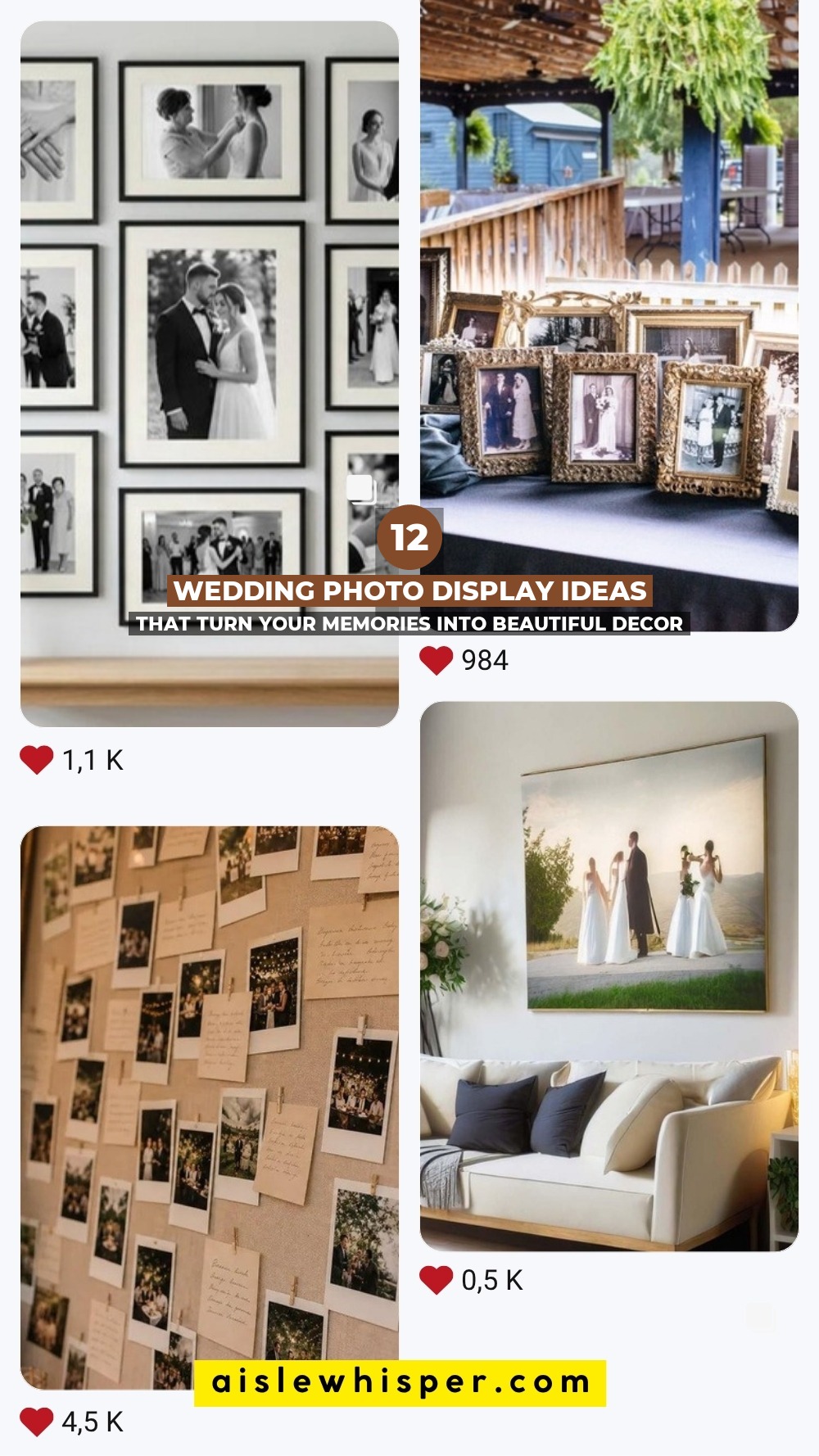
A gallery wall is one of my favorite ways to turn wedding photographs into something that feels like part of a home rather than a collection of decorations. I particularly like arrangements that combine one beautiful portrait with smaller photographs of candid moments. A photograph of the ceremony, a close-up of the flowers, and a picture of everyone laughing at the reception can tell a much richer story together than three nearly identical portraits.
For a polished arrangement, I would start with two or three frame finishes and a consistent mat color. You can mix frame sizes without making the wall feel chaotic. Recent gallery-wall guidance also favors personal collections and intentional layouts over filling every available inch. Keeping roughly two to three inches between frames is a useful starting point, although the wall itself should determine the final arrangement.
- Choose your photographs. Select a mixture of portraits, ceremony details, and spontaneous moments.
- Pick a focal image. Give your favorite wedding photograph the most prominent position.
- Arrange before hanging. Lay the frames on the floor or make paper templates to test the composition.
- Hang at a comfortable height. Consider the furniture underneath and the usual viewing position.
One detail I would not overlook is the photograph's lighting. Avoid placing precious prints where strong direct sunlight will constantly fall on them. A little planning now helps preserve the photographs for the long haul.
Rustic Wooden Photo Display Boards
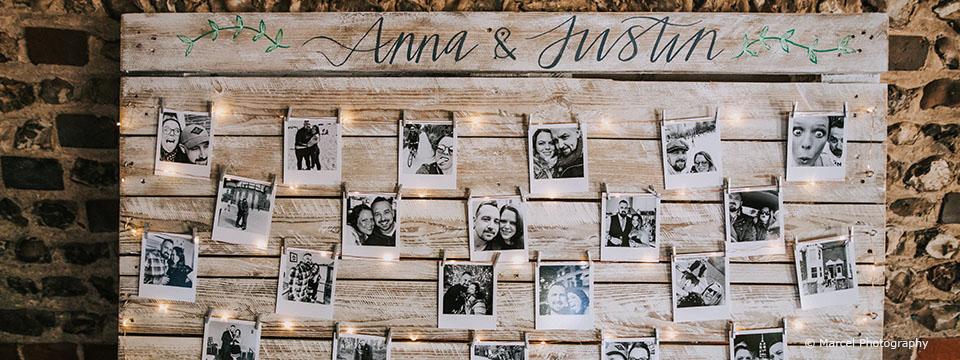
If your wedding has a relaxed countryside, barn, garden, or backyard feel, a wooden photo board can be a lovely alternative to traditional frames. I like the warmth of natural wood because it makes even professionally printed photographs feel approachable. A simple reclaimed board, a few small clips, and a carefully chosen collection of pictures can become a charming focal point.
For a DIY version, attach twine or thin wire across a wooden frame and use miniature wooden clothespins to hold the photographs. Another option is a freestanding wooden lattice with several rows of clips. This approach has a long DIY history, and its simplicity is precisely what makes it appealing.
I'd choose natural wood and simple clips rather than adding too many decorative extras. Small handwritten captions can identify the date, location, or memory behind each photograph. You could also include pictures from childhood, family celebrations, and the proposal to show the story leading up to the wedding.
My practical tip
For an outdoor reception, secure the board against tipping and use weather-resistant materials. Arizona breezes have taught me that lightweight decorations can travel farther than anyone intended. Keep the display shaded, and bring delicate prints indoors if the weather turns.
After the celebration, the board can move into a hallway, office, or bedroom. It is an easy way to give a temporary wedding decoration a second life at home.
Hanging Wedding Photos with Fairy Lights
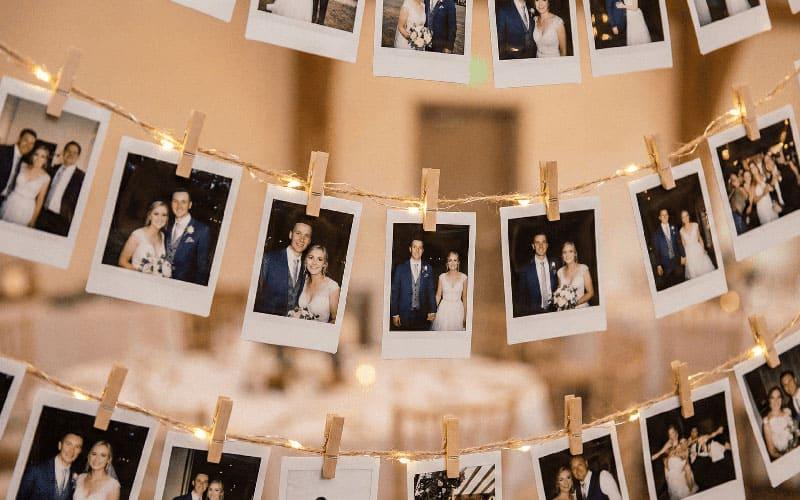
There is something especially lovely about photographs suspended along a strand of warm fairy lights. The arrangement feels soft and romantic without requiring much additional decoration. I've seen how a gentle glow changes the atmosphere of a reception space, particularly once the evening celebrations begin and the natural light starts to fade.
To create this look, hang a strand of warm-white lights against a suitable backdrop, then attach photographs with small clips. You can use a simple horizontal line, several cascading strands, or a rectangular arrangement that creates a photo-wall effect. Warm, gentle lighting works particularly well with candid photographs and instant prints. Wedding photo-wall inspiration also frequently combines twine, pegs, and illuminated backdrops.
I would arrange the photographs in a loose chronological sequence. Start with a picture from when you first met, move through the proposal, and finish with a favorite wedding-day photograph. Guests have something to look at, and the display becomes a little conversation starter.
A safety detail worth remembering
Choose low-heat LED or battery-operated lights, secure the wiring, and keep the installation away from fabric, paper, and other combustible materials. Check the venue's electrical and decoration rules before installing anything. Never leave a homemade lighting arrangement unattended.
For me, this idea works best when the lights are an accent rather than the main event. The photographs should remain easy to see, with enough space between them to appreciate each individual memory.
Vintage Frames for Wedding Photo Displays
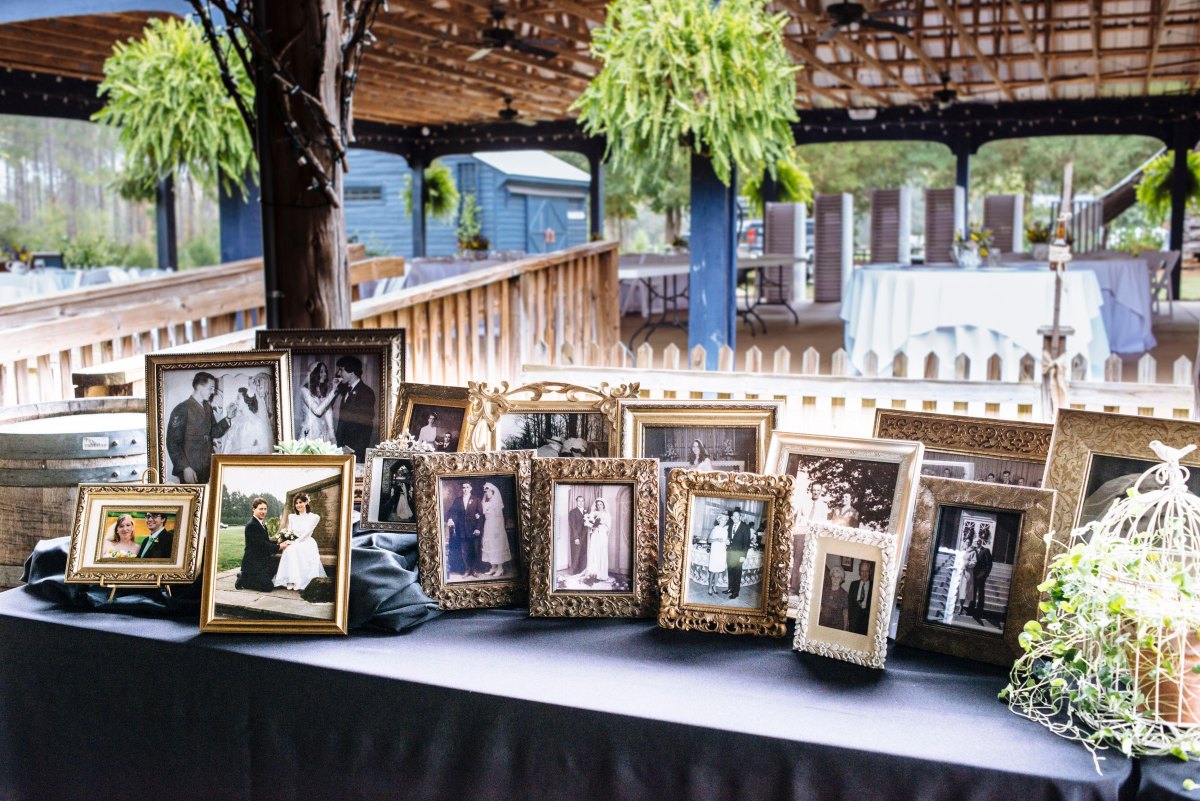
Vintage frames have a personality that brand-new matching frames sometimes lack. I particularly enjoy ornate gold finishes, distressed wood, antique silver, and decorative frames with slightly unusual shapes. They make wedding photographs feel as though they belong to a family story that has been unfolding for generations.
You can create a collected look by combining frames from thrift shops, family attics, antique markets, or existing household collections. Try placing a large portrait inside an ornate frame and surrounding it with smaller photographs in simpler frames. The contrast gives the arrangement a sense of history and character.
Vintage frames can also be useful throughout the wedding reception. They can hold photographs, table numbers, menus, or small messages for guests. Ornate frames are not limited to photographs, which makes them especially useful when you want several decorative details to feel connected.
For a more personal touch, I would include an old wedding photograph from a parent or grandparent alongside your own. It is a quiet way of connecting generations without turning the display into a formal family-history exhibition.
A styling trick I like
Keep one element consistent across the collection. It might be the photograph's black-and-white treatment, a shared mat color, or similar frame proportions. That little connection makes mismatched vintage frames feel intentional.
Before hanging antique frames, check that the backing, glass, and hanging hardware are secure. A beautiful old frame is only useful if it can safely hold the photograph.
Minimalist Wedding Photo Display Shelves
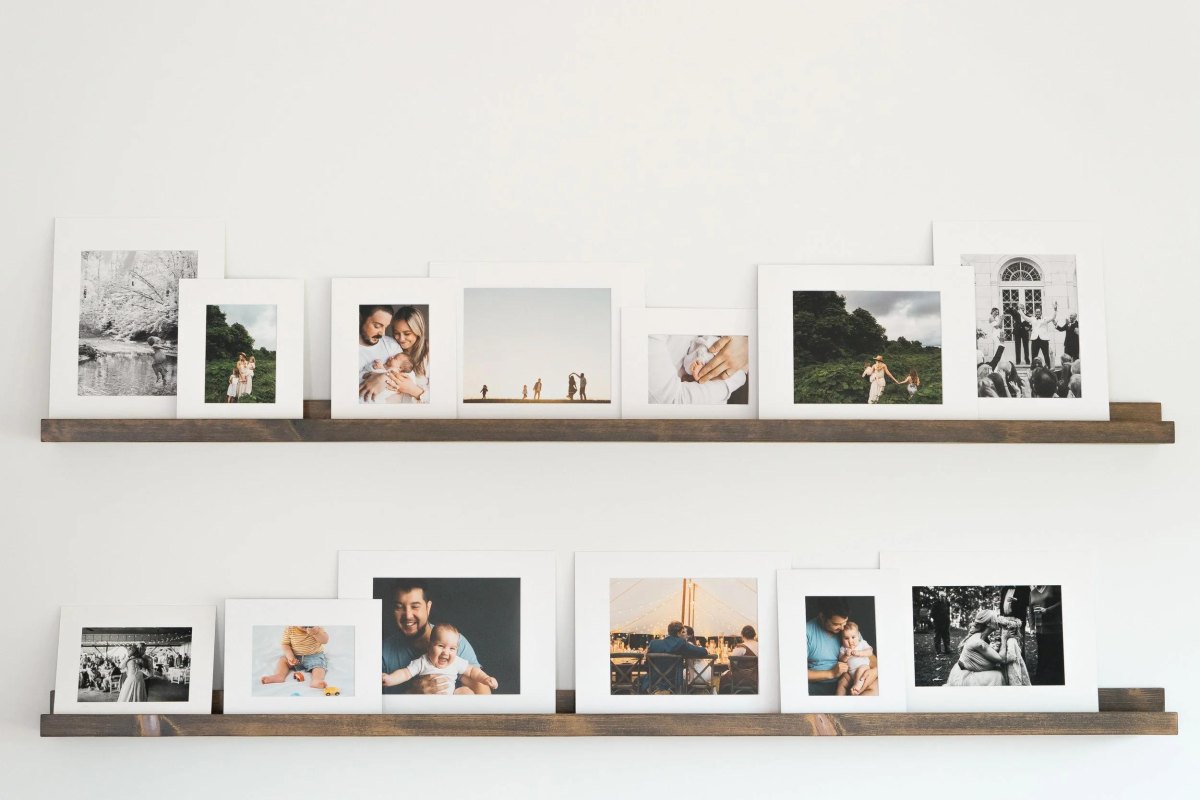
Not everyone wants an entire wall covered in photographs. Some couples prefer a quieter arrangement, and floating shelves or picture ledges are an excellent solution. I like this idea for modern homes, smaller apartments, and rooms where a little visual breathing space makes all the difference.
Choose one or two narrow shelves and arrange framed wedding photographs in different sizes. Lean a larger portrait against the wall, then layer smaller frames slightly in front. You can add a small vase, a meaningful object from the wedding, or a preserved detail from the bouquet. The result feels like a personal little memory corner rather than a formal exhibition.
Picture ledges are especially practical because you can change the arrangement without making new holes in the wall every time. Recent gallery-wall advice also emphasizes testing compositions before committing to permanent hanging arrangements.
I'd keep the number of objects fairly limited. One larger wedding photograph, two smaller images, and one sentimental keepsake are often enough. A crowded shelf can make even beautiful photographs difficult to appreciate.
- Check the shelf's weight capacity before adding frames.
- Use a small non-slip display support to help prevent frames from sliding.
- Secure shelves properly to the wall according to the manufacturer's instructions.
- Keep photographs away from strong direct sunlight and damp areas.
- Leave enough empty space for the display to feel balanced.
This is one of my preferred options for couples who want their wedding memories within everyday reach without making decorating feel like a major project.
Polaroid Wedding Photo Display Ideas
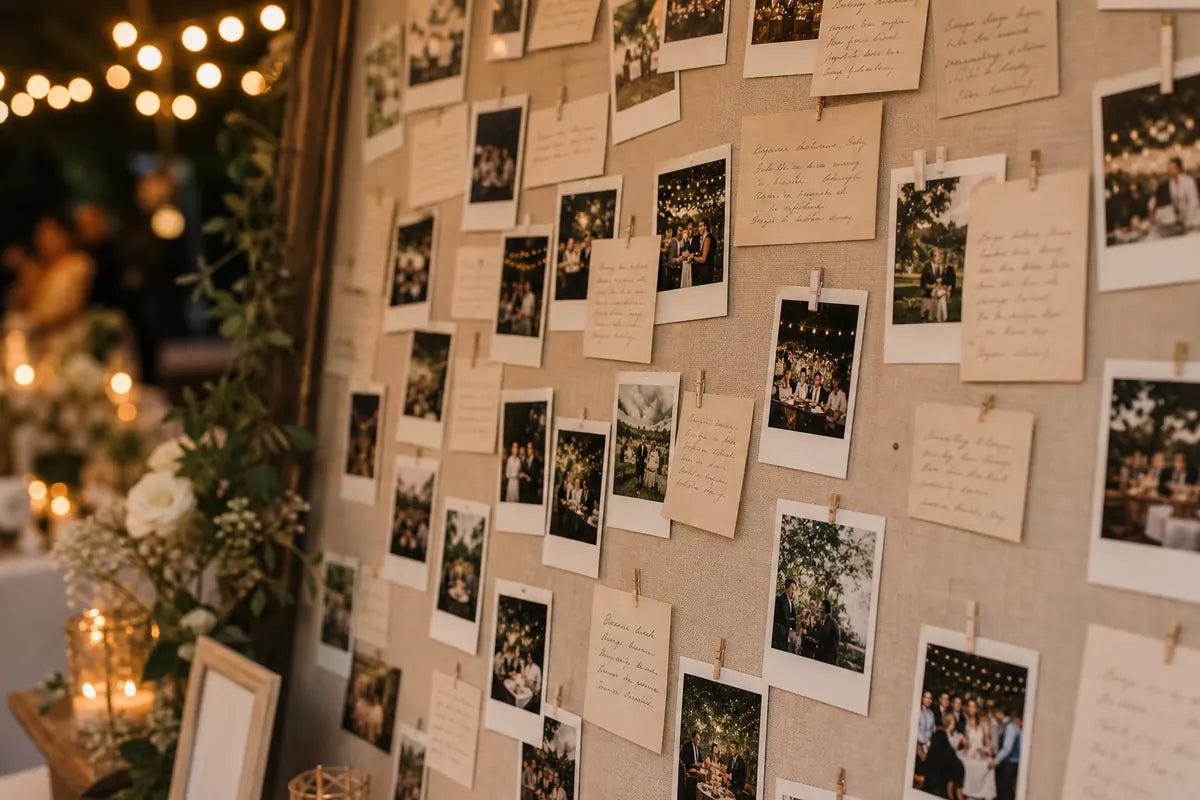
Instant photographs have a wonderfully informal quality. They are imperfect in the nicest possible way, and their familiar white borders make even an ordinary snapshot feel like a keepsake. I've always thought that wedding decorations become more interesting when guests can interact with them instead of simply walking past.
One idea is to create a Polaroid-style photo wall using twine, a wooden frame, and small clips. You can display photographs of the couple before the wedding, or invite guests to add their own instant pictures during the reception. A nearby guestbook station gives people somewhere to write a short message beside their photograph. Photos and handwritten notes together make a particularly lovely keepsake.
If you want guests to participate, provide an instant camera, plenty of spare film, pens, and clear instructions. I would also ask a trusted friend or attendant to keep an eye on the station. Otherwise, the camera can become everyone's favorite object and nobody remembers where the photographs are supposed to go.
Another possibility is a photo-and-message display where each guest attaches a picture to a board and adds a note. At the end of the celebration, gather the photographs and place them in an album or framed collage.
Make it easy for guests
Set up the station somewhere visible but away from busy doorways and food queues. Label the camera, film, and display area clearly, and arrange for someone to collect finished photographs before the evening ends.
What I especially like is that the finished arrangement captures more than the couple's official wedding photographs. It includes the people who were there, their expressions, and little moments the professional photographer may never have seen.
Wedding Photo Displays with Fresh Flowers
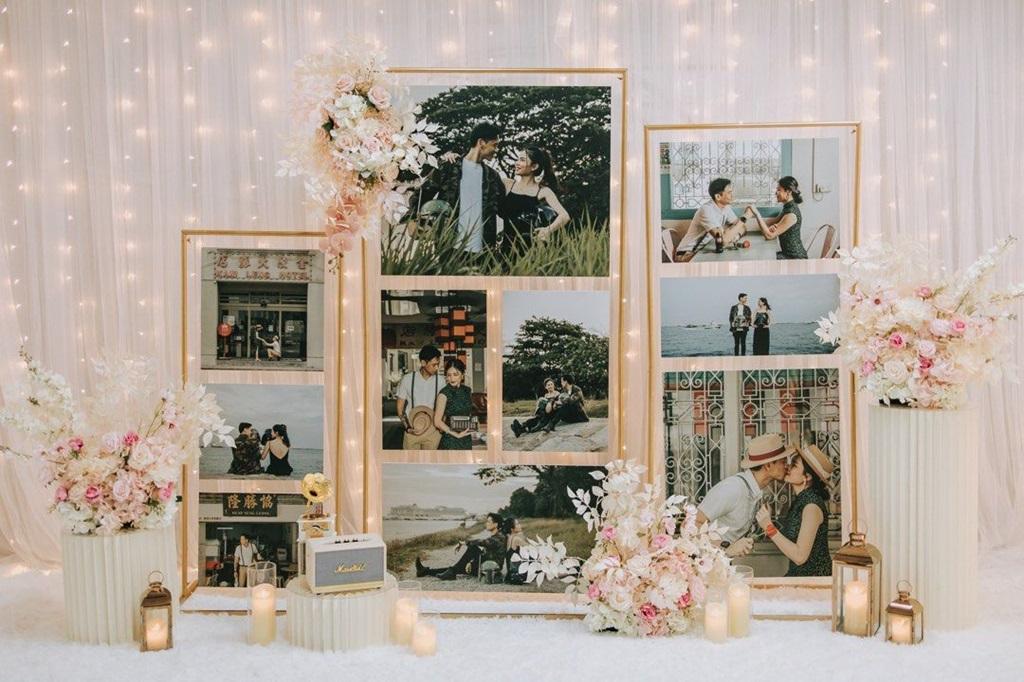
Flowers and photographs are a natural pairing, particularly when you want a display to feel romantic and connected to the rest of your wedding decorations. A framed photograph surrounded by fresh greenery, delicate blooms, or a small floral arrangement can look beautiful on a welcome table, memory table, or reception display.
I would begin with the flowers already being used elsewhere in the celebration. Repeating a few familiar blooms creates a cohesive decorative look without requiring an entirely separate floral design. A small arrangement of seasonal flowers beside a framed photograph is often more effective than a complicated installation.
You could also display a favorite wedding portrait inside a flower-adorned frame or place several framed photographs along a table with greenery running between them. If your photographer captured a close-up of the bouquet, include that photograph as part of the arrangement. It connects the actual flowers with the memory of carrying them.
For an extra sentimental detail, consider preserving a few flowers from the wedding bouquet. They can be dried or professionally preserved and displayed beside the corresponding photograph. I would ask a florist or preservation specialist about the best method because different flowers behave differently as they dry.
Keep the photographs protected
Fresh flowers need water, and water does not belong near valuable photographs or electrical equipment. Use separate stable containers, keep arrangements away from prints, and avoid placing delicate photographs in direct sunlight or humid conditions.
For a home display, I particularly like one framed wedding portrait with a small floral accent. It feels thoughtful without requiring you to maintain a large arrangement every week.
Creative Wedding Photo Grid Displays
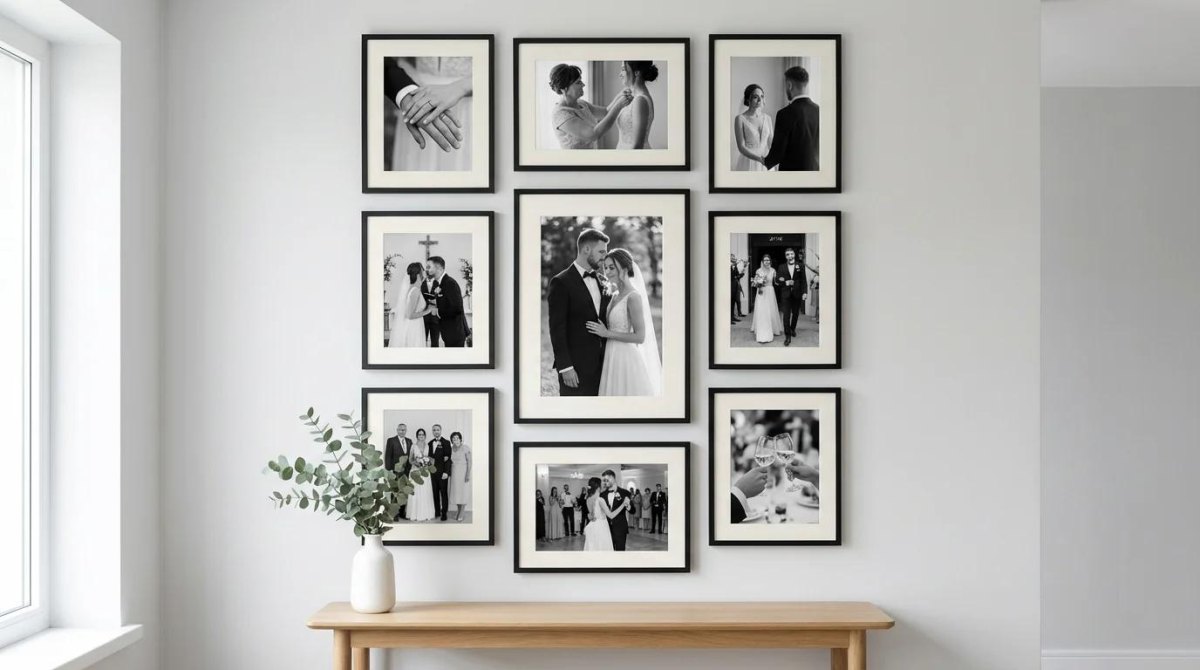
If you enjoy order and symmetry, a wedding photo grid may be exactly the right approach. Unlike an eclectic gallery wall, a grid uses repeated frame sizes, consistent spacing, and straight horizontal and vertical lines. I find this especially effective when the photographs belong to one collection, such as a series of wedding portraits or a mixture of ceremony and reception moments.
You could use nine matching frames in a three-by-three arrangement, or create a larger grid with twelve photographs. Black frames give the display a contemporary feel, while natural wood creates a softer atmosphere. The important thing is to maintain consistent spacing and alignment throughout the arrangement.
Gallery-wall planning guidance identifies grids as a particularly suitable format for matching frames and photo series. Before making holes, lay the frames out on the floor or use paper templates to establish the exact arrangement.
For the photographs themselves, I would avoid choosing nine images that all show the same pose. Mix a close-up, a wide ceremony photograph, a family portrait, a reception moment, and smaller details. This creates visual variety while preserving the neat geometry of the grid.
My layout recommendation
Choose the central photograph first, then work outward in rows. Take a picture of the completed floor arrangement before transferring it to the wall. That simple step saves a surprising amount of rearranging.
A grid is also easy to expand later. You can add anniversary photographs or family milestones while keeping the original wedding pictures at the heart of the display.
Hanging Photo Ladders for Wedding Pictures
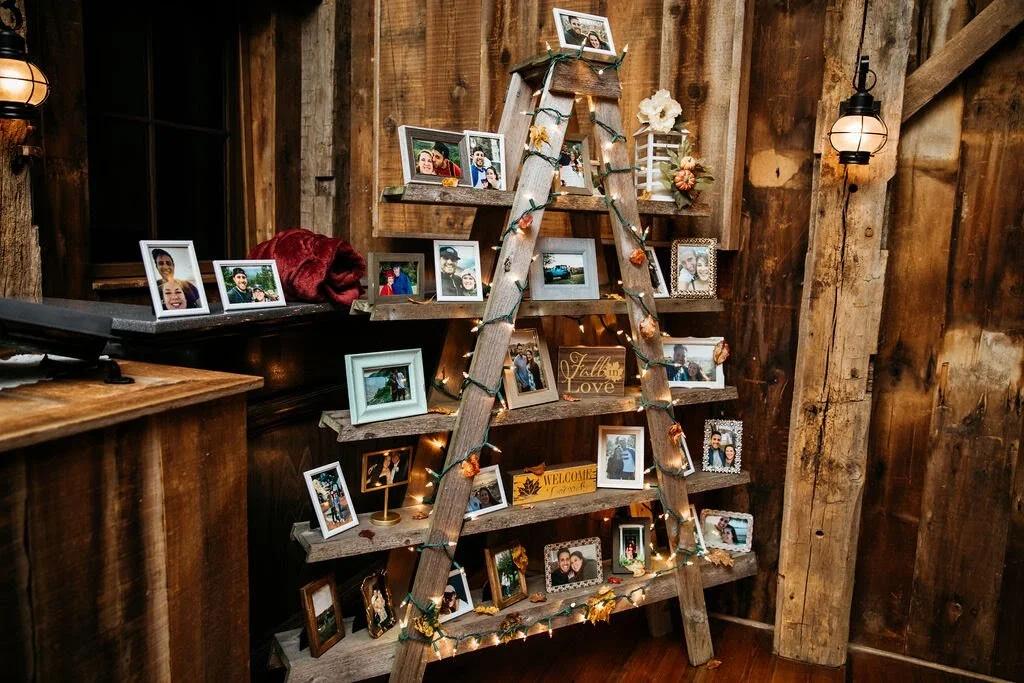
A decorative wooden ladder can become a surprisingly charming photo display. It has height, texture, and a little rustic personality, and it makes use of vertical space that might otherwise remain empty. I've always appreciated decorations that can be moved and reused rather than becoming another item that gets packed away immediately after the wedding.
Choose a stable decorative ladder with several horizontal rungs. Hang photographs from the rungs using twine, ribbon, or small clips, or lean lightweight frames against the structure if the arrangement can be secured safely. You can vary the photograph sizes and include a little greenery between the rows. The result is a relaxed, layered display that works especially well with rustic or garden-inspired decor.
I would arrange the photographs from top to bottom in a loose timeline. Childhood photographs at the top, pictures from the relationship in the middle, and wedding-day memories toward the bottom create a simple visual journey. A small caption beside each section can help guests understand the story without needing a long explanation. This kind of personal photo-wall storytelling is also reflected in current wedding display inspiration.
There is one practical point I would take seriously. A ladder is not automatically stable just because it looks decorative. Secure it against tipping, avoid placing it in a walkway, and keep the photographs and any accessories from becoming a falling hazard. If it is being used at a venue, confirm that the setup meets its safety requirements.
Once the wedding is over, the ladder can become a changing family photo display in a hallway or bedroom. Swap photographs whenever you have a new favorite memory to add.
Personalized Wedding Photo Memory Tables
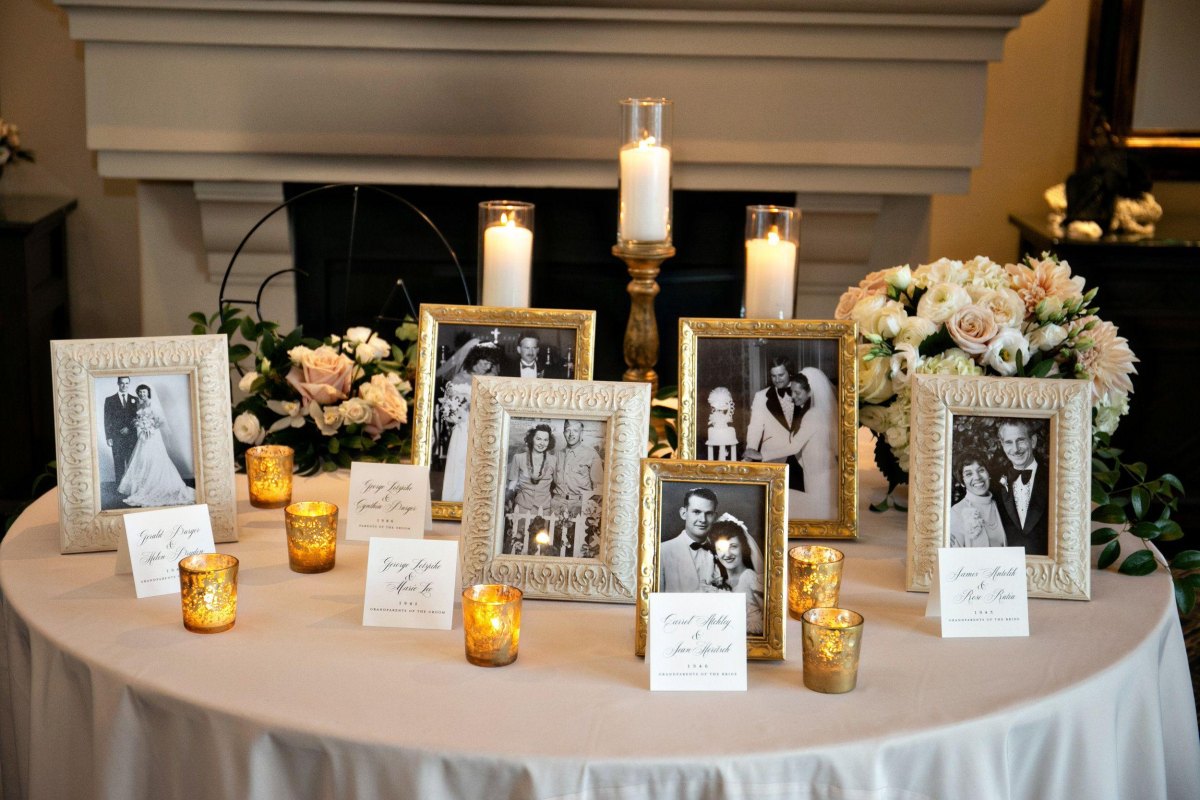
Some photographs deserve a more thoughtful place than a decorative wall. A wedding memory table gives you an opportunity to celebrate the people, places, and family stories that helped shape your relationship. I have officiated ceremonies where a simple photograph of a grandparent or a small family keepsake brought more emotion into the room than any elaborate decoration.
A memory table can include framed photographs of parents, grandparents, children, close friends, or loved ones who cannot attend. It can also celebrate family history rather than focusing only on loss. A photograph of a parent's wedding, an old family portrait, or a picture from a meaningful shared holiday can make the display feel warm and personal.
I'd keep the arrangement edited. A few photographs, a short handwritten note, and one or two meaningful objects are usually enough. Recent wedding memory-table guidance similarly recommends a restrained display in a visible but peaceful location, away from busy traffic areas.
If you want to honor someone who has died, choose a photograph that feels like them. It does not need to be the most formal portrait. Sometimes the happiest, most recognizable image is the one that makes family members smile immediately.
Give the display the right amount of space
Place the table somewhere guests can pause without blocking entrances, catering areas, or the main reception route. If you include candles, check the venue rules and consider flameless alternatives. Outdoor displays should be protected from wind.
One small detail I particularly like is a short caption in the person's own words, perhaps a favorite saying or a handwritten message. It makes the table feel less like a collection of objects and more like a genuine connection between generations.
Large Canvas Prints for Wedding Photos
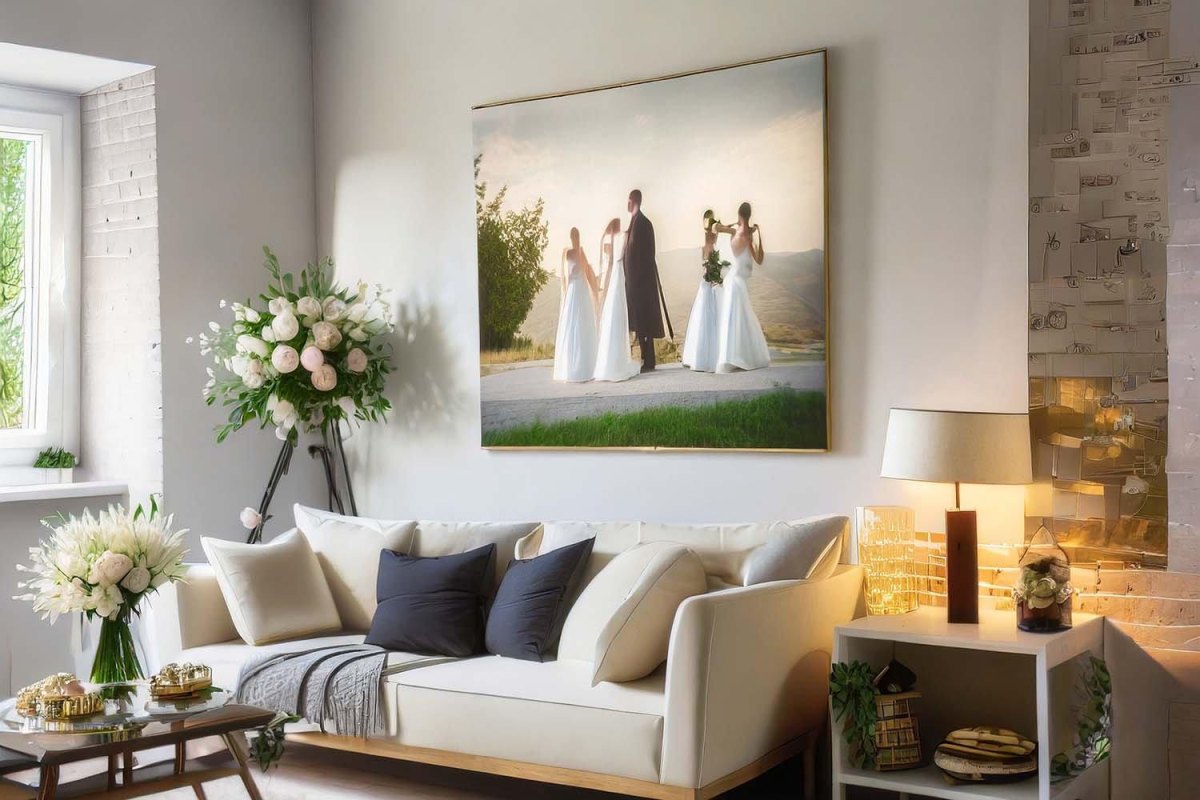
Sometimes one photograph is good enough to stand on its own. A large canvas print gives a favorite wedding portrait the attention it deserves without requiring a collection of smaller frames. I particularly like this approach for a beautiful ceremony photograph, a quiet couple's portrait, or an image that captures the landscape around an outdoor wedding.
Choose a photograph with enough resolution for the intended print size. A high-quality original file is preferable to a compressed social-media download or screenshot. As a practical printing guideline, around 150 pixels per inch can work well for large canvas prints viewed from a normal room distance, although the final result depends on the image, printing process, and viewing distance.
For a contemporary look, choose a gallery-wrapped canvas with the photograph continuing around the edges. If you prefer a more traditional appearance, a framed canvas can give the image a finished, substantial look. I would choose a simple, complementary frame rather than something that competes with the photograph itself.
Before ordering, check the wall dimensions and consider the furniture underneath. A large canvas should feel proportionate to the room rather than squeezed into a narrow space. You can use a paper template to test the size before committing to a print.
Choose the photograph carefully
Ask your photographer for the original high-resolution file and check your printing company's resolution recommendations. Avoid heavily cropped images if you are planning an oversized canvas.
I would also avoid hanging the canvas in direct sunlight or somewhere exposed to moisture. The goal is to create a lasting piece of wedding artwork that you will still enjoy looking at years from now.
Digital Wedding Photo Frames and Displays
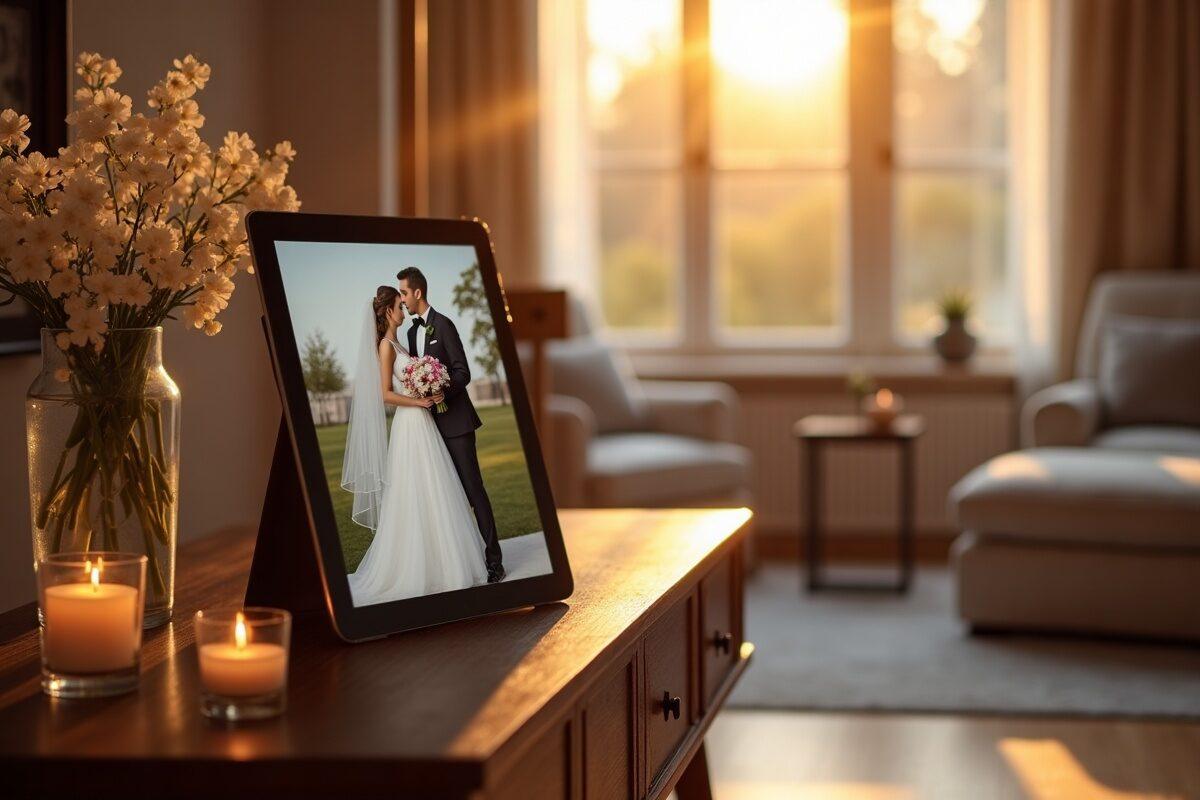
For couples who have hundreds of favorite photographs and cannot possibly choose just a handful, a digital photo frame offers another solution. I like the idea of a display that changes throughout the day, showing the ceremony in the morning, candid reception moments in the afternoon, and photographs from family and friends in the evening.
Modern digital frames can store large photo collections, display automatic slideshows, and accept new images through apps, email, memory cards, or connected storage, depending on the model. Some products also support remote photo sharing, making it possible for family members to contribute pictures from different locations. Recent 2026 product testing highlights differences in image quality, ease of uploading, storage, screen brightness, and subscription requirements.
I'd choose a frame with a screen size that suits its location. A smaller model can work beautifully on a bedside table or bookshelf, while a larger display may be easier to appreciate from across a living room. Look for good screen resolution and adjustable brightness, and check whether the device needs a permanent Wi-Fi connection.
Another consideration is privacy. If several relatives can upload photographs remotely, check the sharing permissions and who has access to the collection. A frame with straightforward controls is preferable to one that requires everyone to manage a complicated account.
- For easy sharing: Look for app or email uploads that relatives can use comfortably.
- For unreliable Wi-Fi: Consider local storage or memory-card support.
- For a peaceful display: Choose adjustable brightness and an automatic sleep schedule.
- For long-term use: Check storage limits, subscription fees, and supported file formats.
I'd load the frame with a carefully selected wedding album before putting it on display. That way, the slideshow begins with photographs you love rather than every screenshot and duplicate that happened to end up in your camera roll. It is a lovely way to keep your wedding story changing and alive long after the celebration has finished.
More Pinterest Visuals



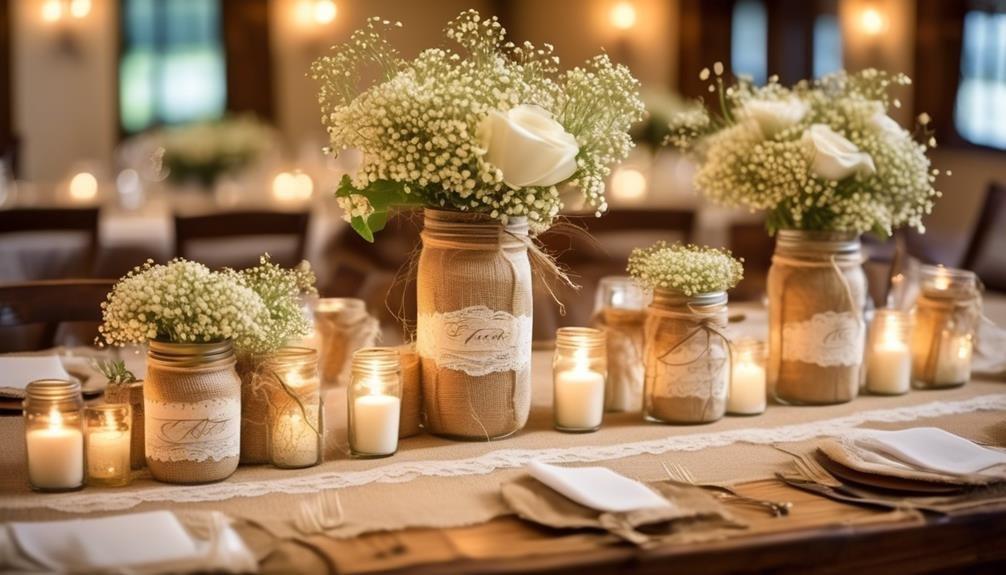 Wedding Decor7 Cheap DIY Wedding Decor Ideas That Look Beautiful Without the Big Budget
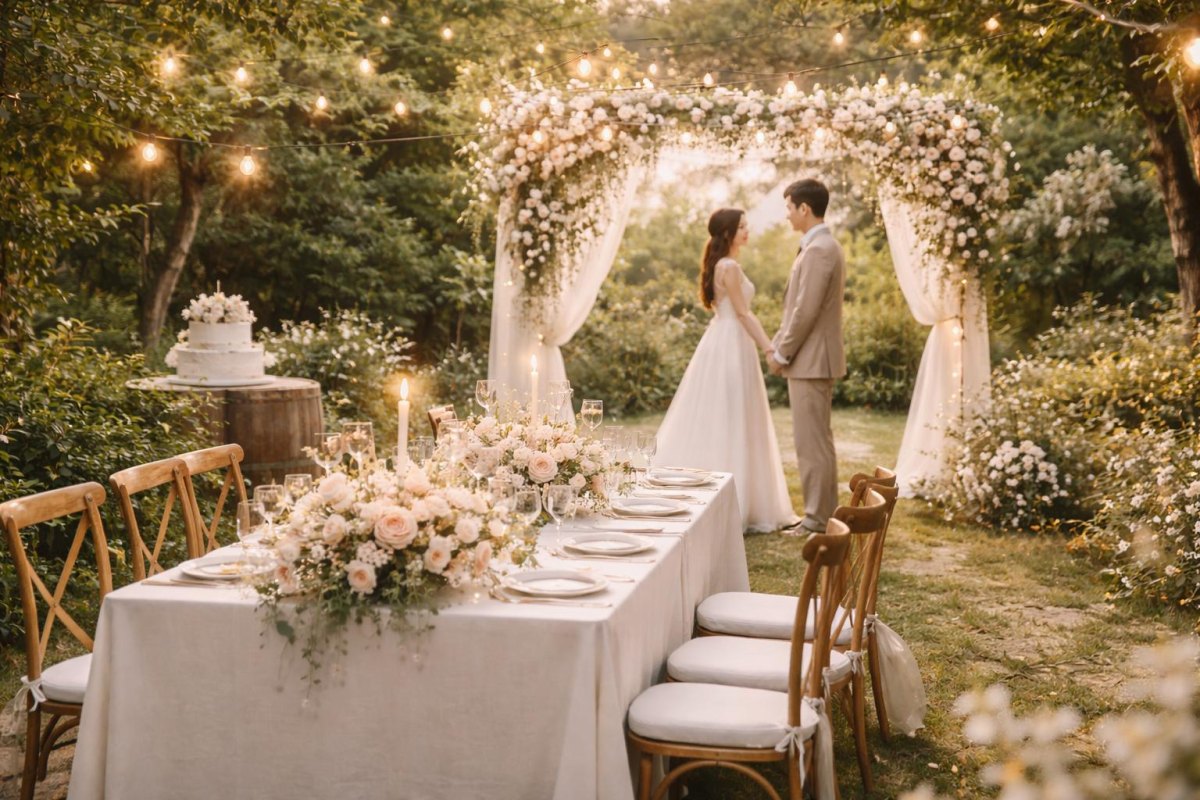 Wedding Planning12 Micro Wedding Venue Ideas For An Intimate
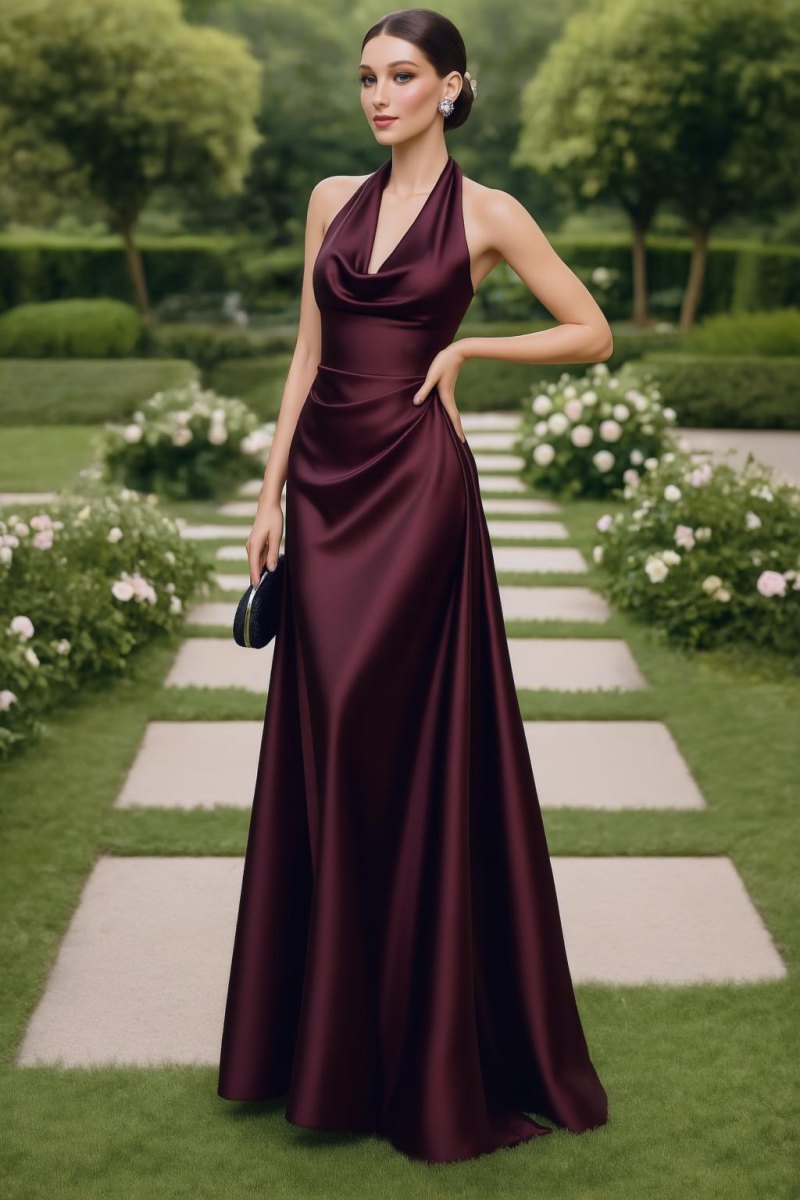 Wedding Guest Outfits14 Burgundy Wedding Guest Dress Ideas for an Elegant, Unforgettable Look
 Wedding Guest Outfits11 Garden Wedding Guest Dress Ideas That Feel Romantic and Elegant