
 23.10.2026
Choosing a lehenga for a wedding is one of those lovely decisions that can become unnecessarily complicated. You want to look festive, feel comfortable enough to enjoy the celebration, and respect the couple's traditions without spending a small fortune on something you will wear once. After standing through hundreds of wedding ceremonies, I can tell you that the guests who look most at ease are usually the ones whose outfits let them enjoy the actual day rather than spend it adjusting a blouse or rescuing a slipping dupatta.
For 2026, I particularly like the balance between traditional craftsmanship and lighter, more wearable silhouettes. Pastels, jewel tones, delicate florals, controlled sparkle and contemporary cuts offer plenty of personality without requiring an outfit to outshine everyone else. The following 16 ideas cover different ceremonies, seasons and personal styles, with practical details to help you make each look your own.
A quick guide to choosing your wedding guest lehenga
- For daytime weddings, consider floral prints, pastels and lightweight fabrics.
- For evening receptions, explore emerald, royal blue, burgundy and sequins.
- For mehndi and sangeet celebrations, choose a skirt that allows you to move and dance.
- Before settling on red, ivory, white or black, check the couple's dress code and cultural preferences.
Classic Red and Gold Lehenga for a Traditional Wedding
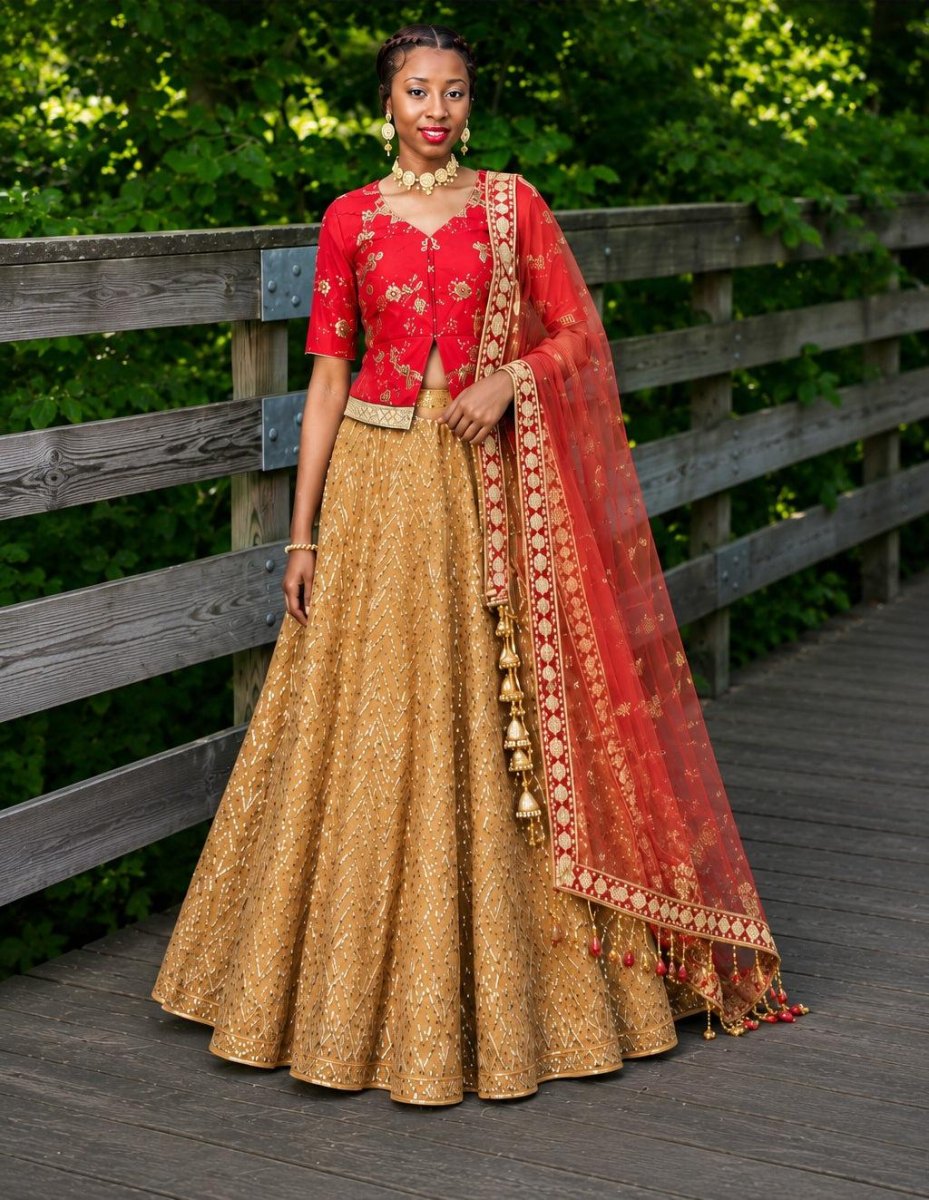
A red and gold lehenga has a presence that is difficult to mistake. Rich embroidery, a full skirt and traditional gold detailing make this combination a natural choice for a formal Indian wedding, particularly when the celebration calls for classic festive attire. I would look for antique-gold threadwork and considered detailing rather than automatically choosing the heaviest embroidery available.
There is one important guest-etiquette point here. Red is a significant bridal colour in many Indian wedding traditions, so I would check with the couple or family before wearing a particularly bridal-looking red ensemble. A deeper ruby shade, restrained embellishment or a contrasting blouse can help establish a celebratory guest look rather than a second bridal outfit.
Style the lehenga with gold jhumkas, a coordinating clutch and comfortable embellished footwear. If the skirt is already richly decorated, I would keep the necklace relatively simple. Current guest-style guidance also favours wearable construction and embellishment that suits the function rather than bridal-level ornamentation (2026 wedding guest lehenga trends).
Pastel Pink Lehenga for a Romantic Wedding Look
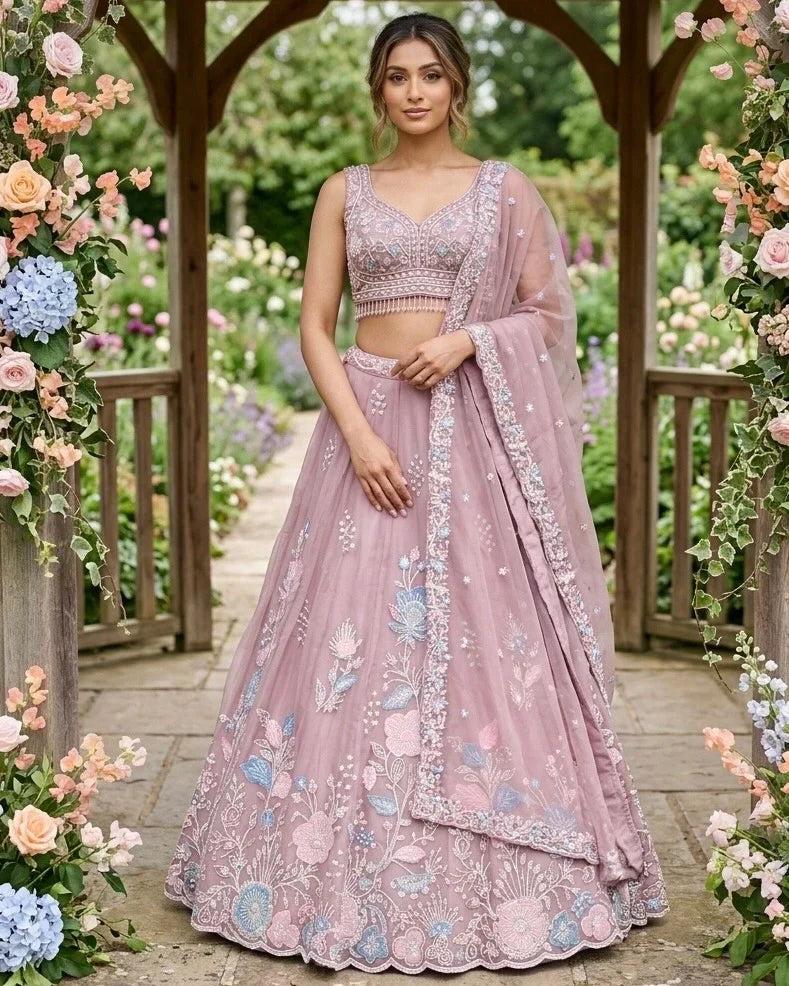
For a romantic look that feels fresh rather than overly formal, I would choose a pastel pink lehenga with delicate floral embroidery, a softly flared skirt or a little shimmer along the hem. Blush and dusty rose work beautifully for daytime celebrations because they feel gentle in natural light while still looking festive. The trick is finding a shade that complements your complexion instead of choosing a colour simply because it is fashionable.
I like lightweight georgette and softly layered net for this style. Both can create movement without making the skirt feel cumbersome, although the lining and number of layers matter just as much as the fabric name. A simple embroidered blouse and pearl or gold-toned earrings give the outfit a polished finish.
Pastel pink is also a practical option when a wedding has several functions. Change the jewellery, hairstyle or dupatta drape to create a different mood without buying another complete outfit. Before committing, check whether the shade is reserved for the wedding party, particularly if the couple has chosen coordinated pastel attire. The broader 2026 occasionwear conversation continues to feature soft pinks and other pale shades (wedding guest outfit trends).
Emerald Green Lehenga for a Regal Celebration
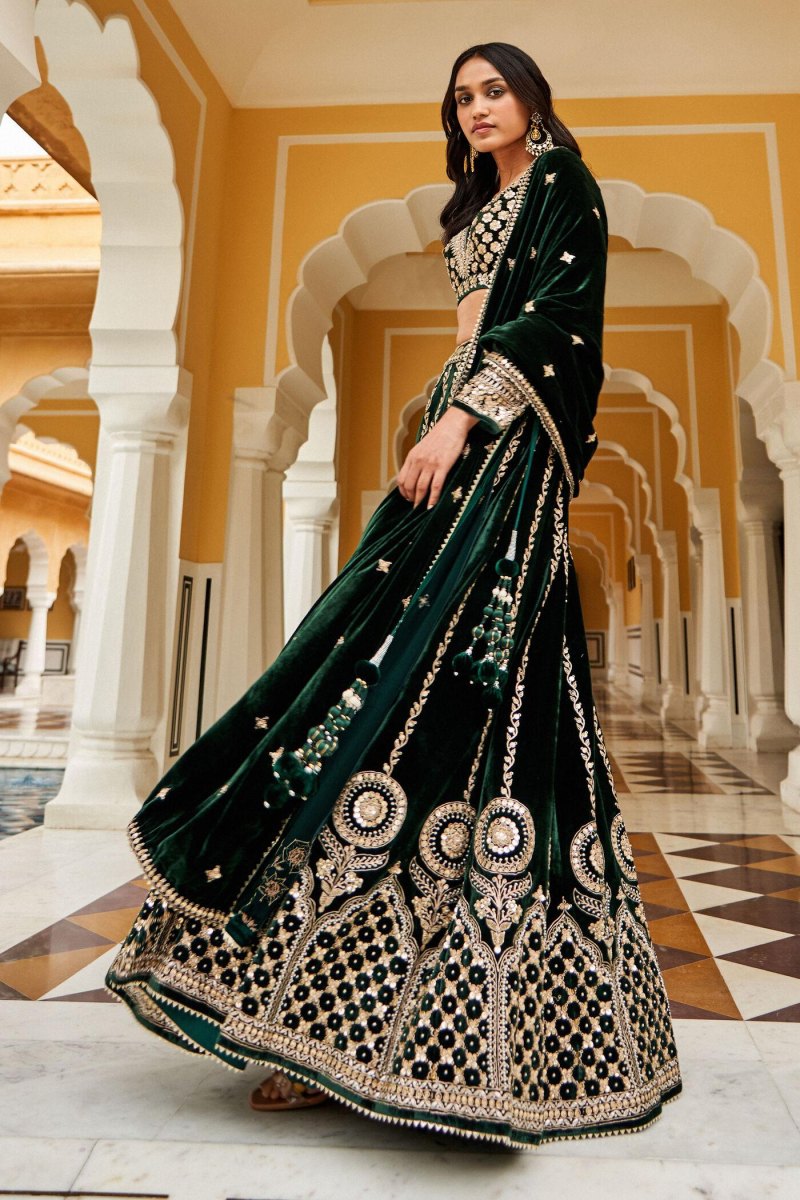
Emerald green is one of my favourite directions for an evening wedding guest outfit. It is saturated without being loud, and it gives gold embroidery a lovely depth. A velvet lehenga can feel especially sumptuous in cooler weather, while silk blends and georgette offer a less weighty alternative for a long reception.
For a balanced look, I would choose one strong colour and one clear metallic accent. Antique gold jewellery, a small structured clutch and understated makeup let the green remain the centre of attention. If the blouse has a high neckline or elaborate embroidery, statement earrings may be all the jewellery you need.
Fit deserves more attention than embellishment. Walk, sit and lift your arms during the fitting, and make sure the waistband remains comfortable after a meal. I have watched guests spend an entire ceremony discreetly readjusting outfits that looked magnificent on a hanger. A regal lehenga should give you confidence and freedom of movement, not another job to do during the wedding.
Ivory and Gold Lehenga for Understated Elegance
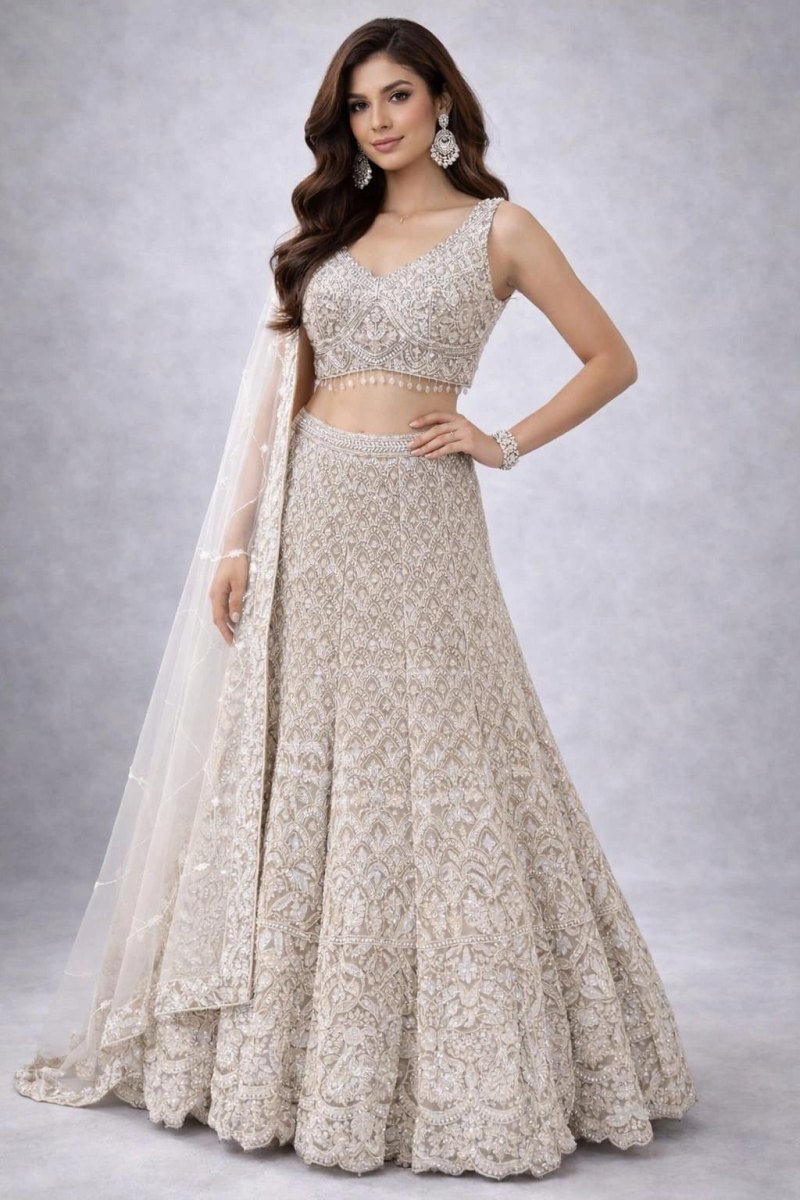
Ivory and gold can be breathtaking when the design relies on fine embroidery, beautiful texture and a clean silhouette rather than an abundance of decoration. I would consider this combination for a formal celebration where the dress code welcomes neutral tones, especially when the lehenga has delicate gold threadwork and a blouse with thoughtful tailoring.
However, this is a colour combination I would never choose without checking first. Ivory, champagne and off-white may be associated with bridal attire in some weddings, and traditions differ between families and communities. Ask whether these shades are appropriate before purchasing the outfit. Respecting the couple's dress code matters more than following a trend.
For styling, warm gold earrings, a fine bracelet and champagne footwear create a cohesive look. I would avoid adding several competing metallic shades. The best version of this outfit feels quietly luxurious and intentional, with the embroidery providing the detail instead of layers of accessories. Minimal styling is also consistent with contemporary occasionwear's move toward clean lines and controlled ornamentation (contemporary wedding guest fashion trends).
Floral Lehenga for a Daytime Wedding
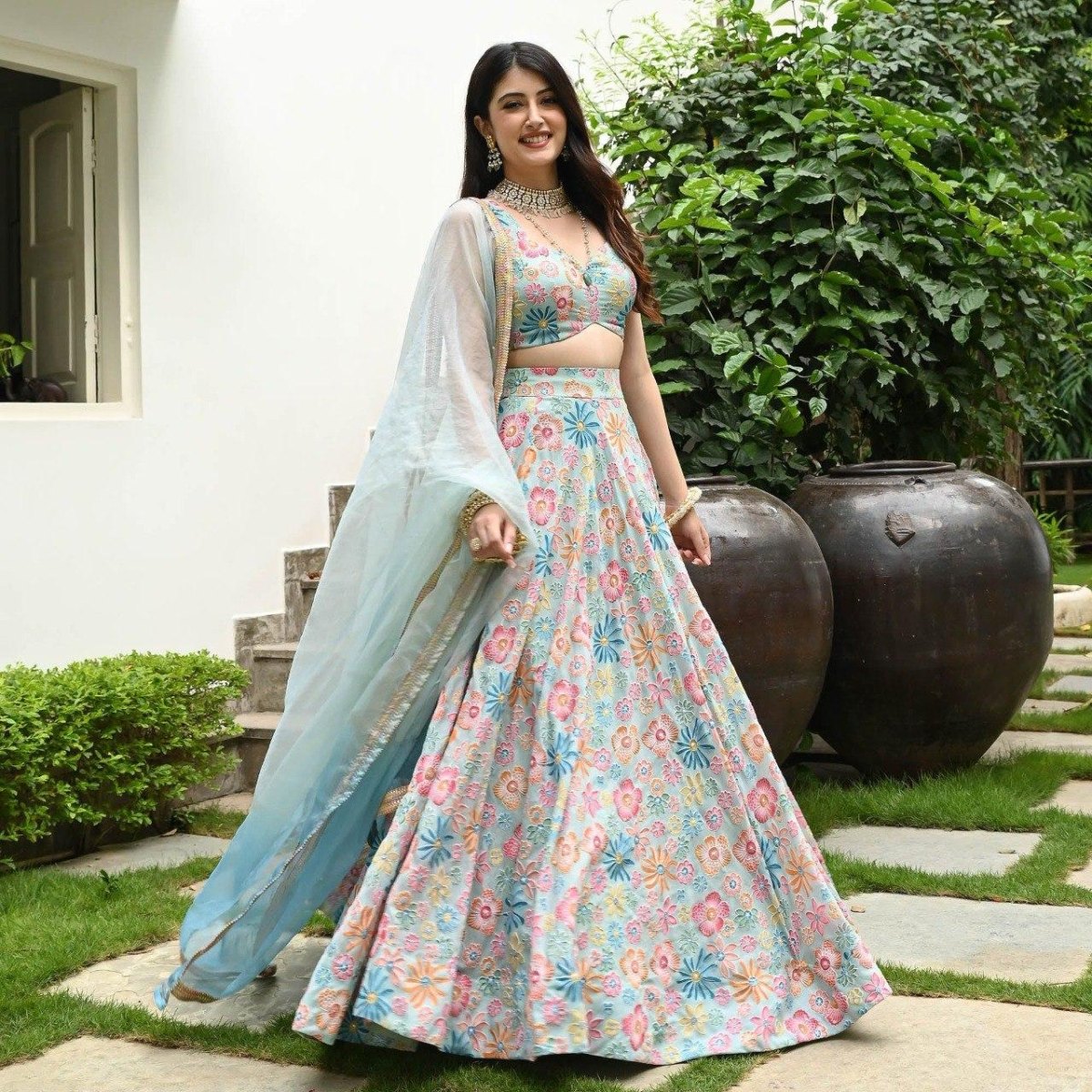
For a garden wedding, daytime ceremony or outdoor family celebration, a floral lehenga can offer exactly the right amount of colour without relying on dense embroidery. I particularly like peach, powder blue, soft pink and butter yellow prints against a light background. The floral pattern does much of the decorative work, so the rest of the outfit can remain uncomplicated.
When choosing a print, I would pay attention to the scale and spacing of the flowers. Large blooms make a confident statement, while smaller repeated motifs can feel more delicate. Neither is automatically better; what matters is how the print works with the blouse, skirt volume and dupatta. If the skirt is busy, a solid-colour blouse often provides a useful visual pause.
Keep the jewellery light enough for a daytime setting. Pearl earrings, delicate gold pieces or a single colourful accessory are good starting points. If the wedding is outdoors, also consider the ground underfoot and the expected temperature. A flowing skirt should be lovely to walk in, not something that catches on grass or drags through dust. Floral prints remain a strong daytime option because they bring visual interest without requiring heavy surface embellishment (floral lehenga styling for day weddings).
Mirror-Work Lehenga for a Colorful Mehndi Ceremony
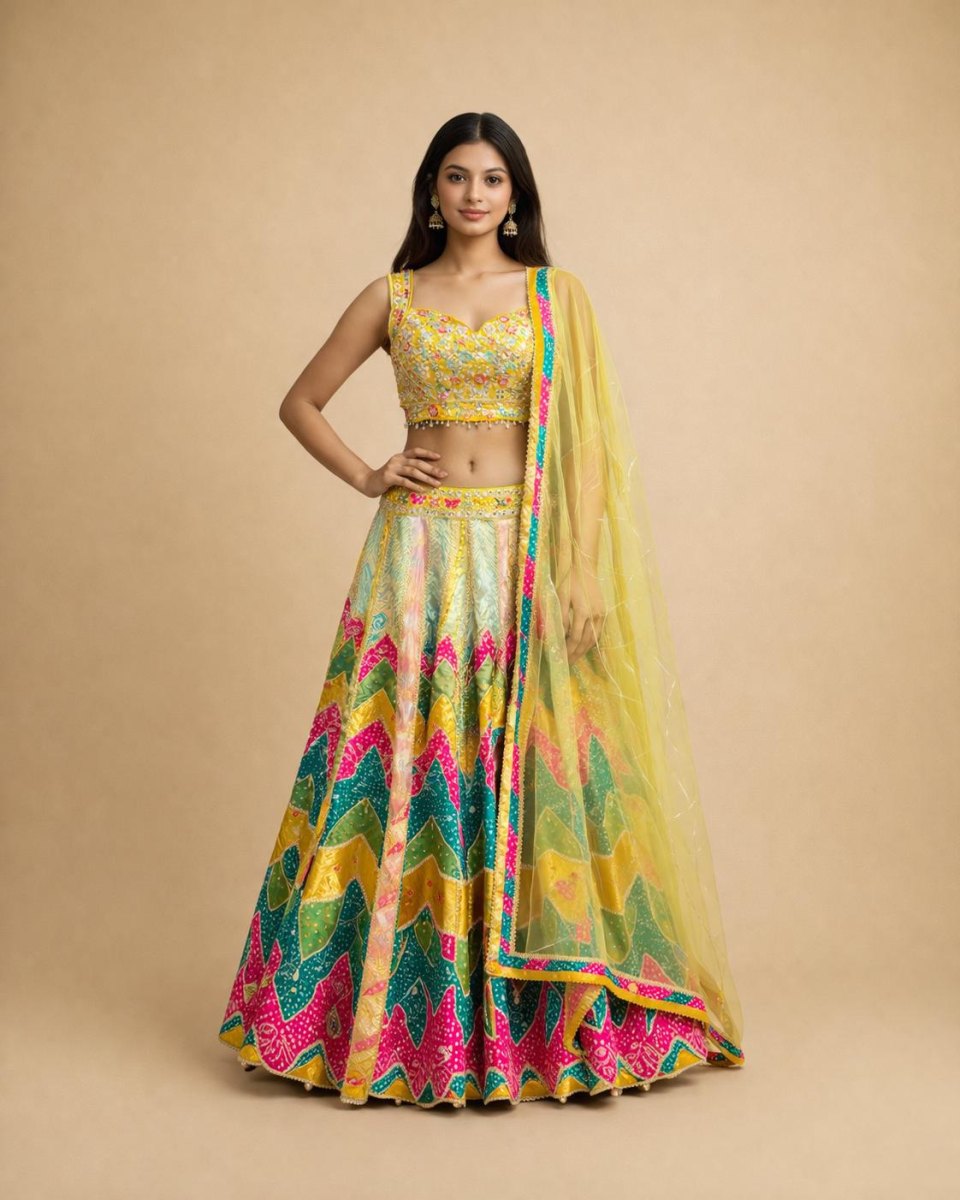
Mehndi celebrations are an excellent opportunity to embrace colour, movement and traditional embellishment. A yellow, lime, turquoise or multicoloured lehenga with mirror work feels joyful without needing a particularly elaborate silhouette. I would look for small reflective details arranged across the skirt or blouse, with embroidery that complements the mirrors rather than competing with them.
For this occasion, comfort is part of the styling. Lightweight georgette, cotton-silk blends and other breathable constructions can be useful when the celebration involves warm weather, extended sitting or dancing. Check the lining, sleeve fit and waistband, and make sure the skirt does not restrict your stride.
Try jhumkas, embellished flats and a dupatta secured over one shoulder. If you expect to participate in henna activities, avoid sleeves or accessories that repeatedly fall toward your hands. I would also keep precious jewellery to a manageable minimum. The point is to join the festivities, not to spend the afternoon guarding a bracelet. Choose bright colour and easy movement over unnecessary layers, especially for a daytime mehndi.
Sequin Lehenga for a Glamorous Reception
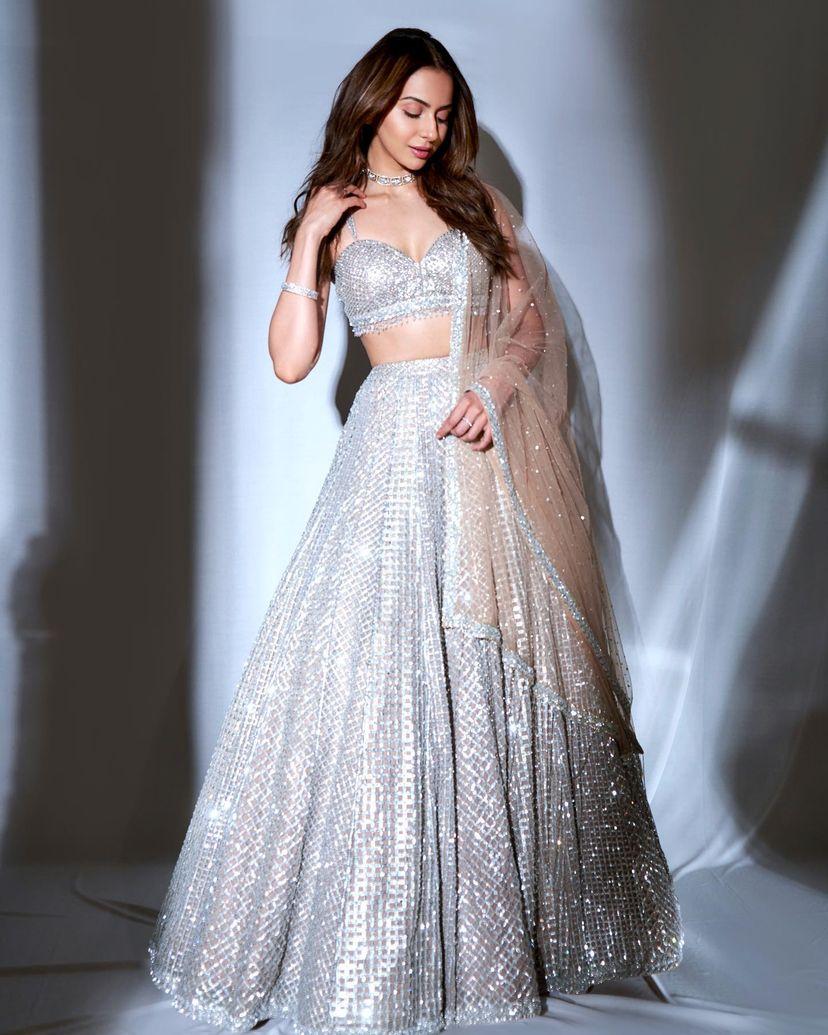
A reception is a natural setting for a sequin lehenga. Under evening lighting, reflective embellishments can add dimension and movement, especially on a skirt that catches the light as you walk. Silver, champagne, rose gold and muted metallic shades all offer different moods, from modern glamour to traditional festive dressing.
My preferred approach is one principal source of sparkle. If sequins cover most of the skirt, choose simpler jewellery and a clean blouse shape. If the skirt is relatively understated, statement earrings or a more dramatic neckline can carry the look. A compact clutch and metallic heels complete the outfit without adding unnecessary visual noise.
Before buying, check the inside seams and lining. Rough embellishment can catch on delicate fabrics, and an unlined or stiff waistband can become uncomfortable after several hours. Walk around in the lehenga under ordinary room lighting, too, rather than judging it only by studio photographs. A glamorous reception outfit should still feel good when you are sitting through speeches and dancing later. Sequins are an established option for reception dressing, where they can work particularly well under event lighting (wedding reception guest outfit guidance).
Black Lehenga for a Chic Evening Wedding
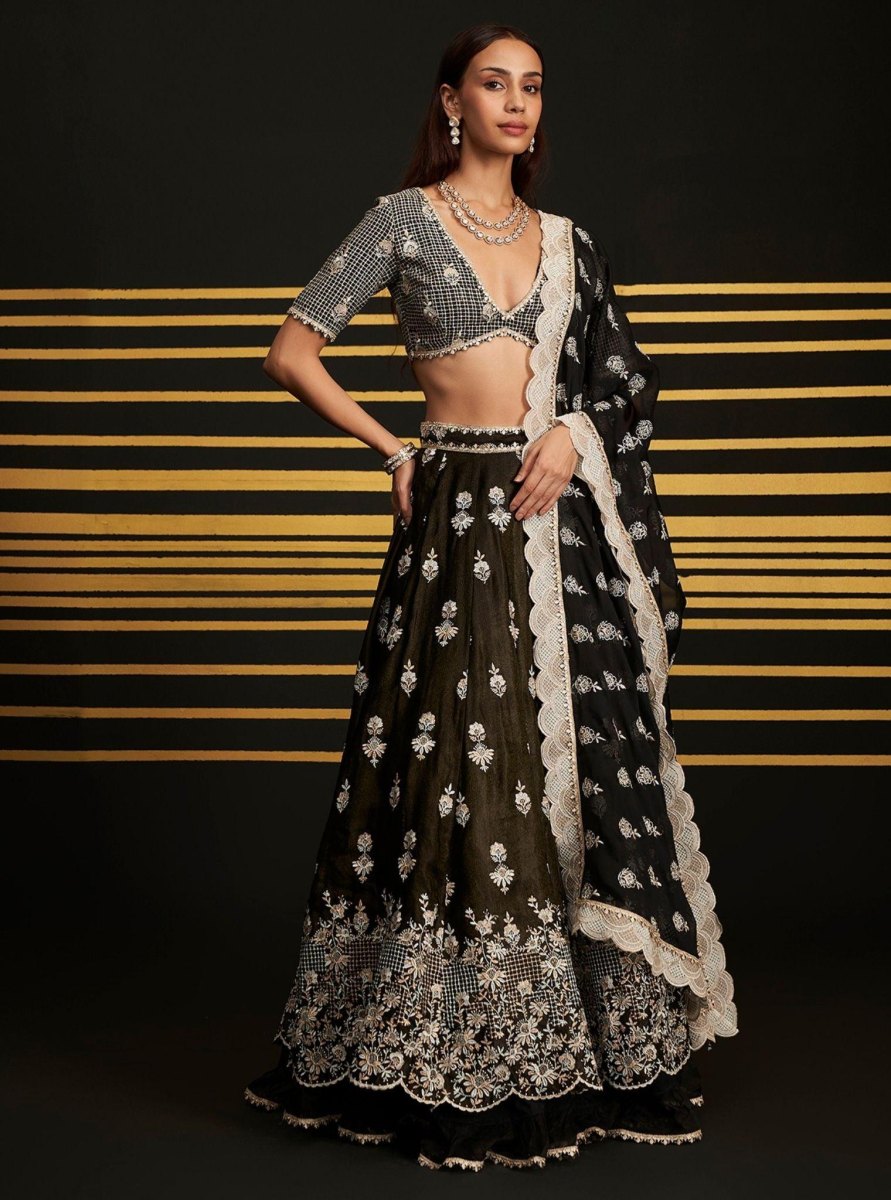
A black lehenga can look wonderfully sophisticated, especially when it features silver embroidery, tonal beadwork or a clean, contemporary silhouette. I would choose it for a cocktail-style celebration or evening reception where the couple's dress code makes black appropriate. The result can be dramatic without needing a great deal of extra decoration.
There is a cultural consideration here, just as there is with bridal red and ivory. Black is not universally appropriate for every wedding; some families welcome it for formal evening events, while others prefer different colours for traditional ceremonies. A quick question to the couple or a trusted family member can save an uncomfortable guess.
For a polished finish, try silver earrings, a sleek clutch and a defined lip colour. If the lehenga is heavily embellished, keep the necklace simple or skip it altogether. A black outfit can absorb light, so embroidery, texture and the finish of the fabric help maintain visual interest in photographs. I would aim for elegant contrast rather than excessive sparkle, allowing the silhouette to do some of the work.
Lavender Lehenga for a Modern Wedding Guest Look
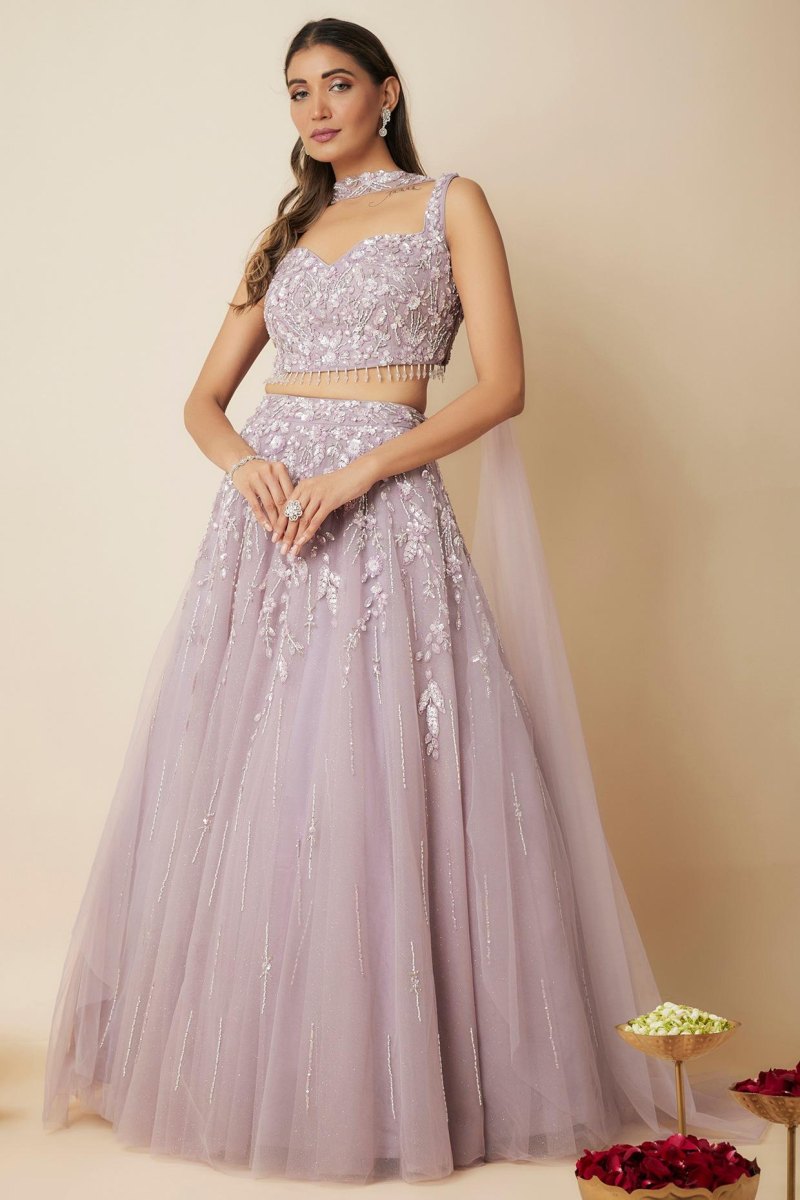
Lavender offers a softer alternative to the more familiar pink and blue palettes. It can look romantic in daylight and polished in the evening, particularly when paired with delicate threadwork, fine sequins or a softly layered skirt. I like it for guests who want colour without choosing something especially bright.
For a modern finish, I would pair lavender with silver, pearls or white-stone jewellery. Gold can also work beautifully, especially when the embroidery already contains warm metallic threads. The choice depends on the undertone of the fabric and the neckline of the blouse. A silver clutch and metallic block heels provide a practical finishing touch for a long celebration.
Keep the makeup coordinated rather than perfectly matched. Rose, mauve, taupe and soft brown shades complement lavender without turning the entire look into one flat colour. If the outfit contains substantial sequin work, I would let that supply the shine and keep other finishes restrained. For fit, check the skirt length with your chosen shoes and practise walking and sitting. A graceful silhouette should work in motion, not only in a posed photograph. Lavender is also a versatile choice for sangeet events and receptions (lavender lehenga styling ideas).
Royal Blue Lehenga for a Statement-Making Outfit
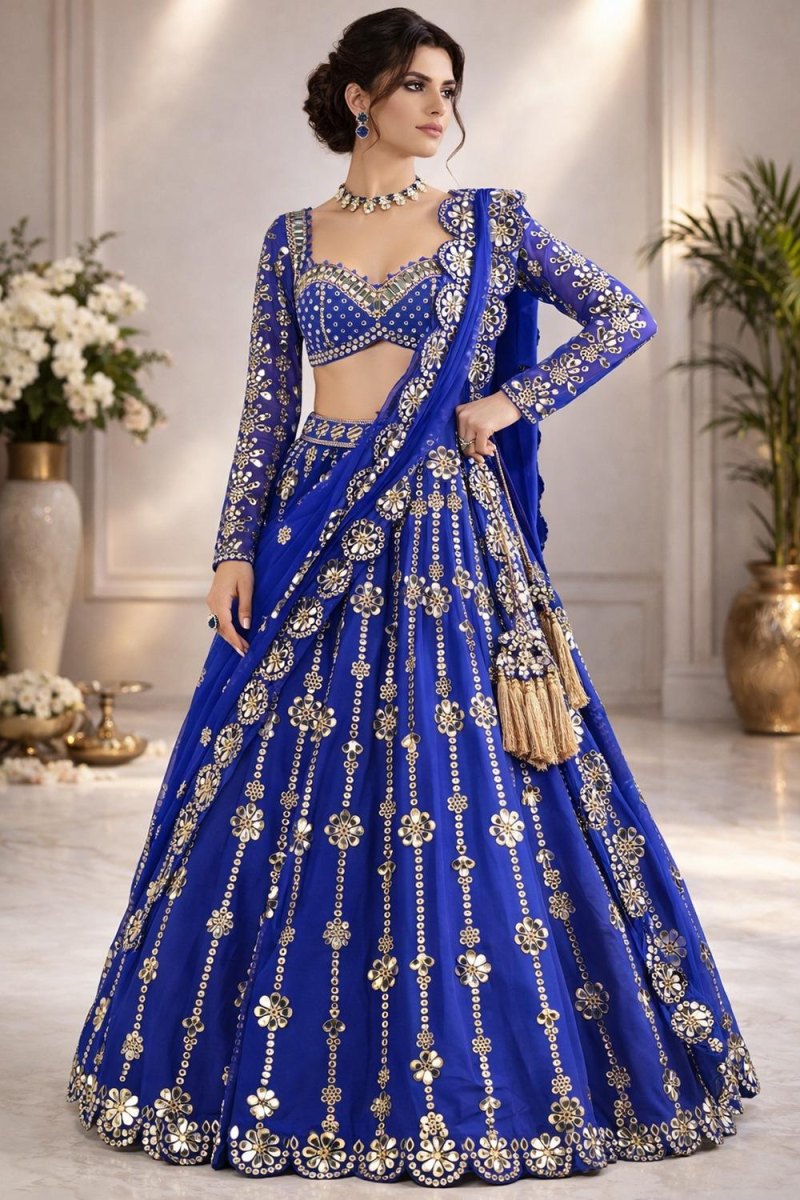
When I want a wedding guest look with a little more presence, royal blue is an appealing choice. The colour feels rich and festive, while gold or silver embroidery creates contrast against the deeper base. It works especially well for evening functions, though a lighter fabric and restrained embellishment can make it suitable for a daytime celebration too.
I would start with a well-defined shade of blue and decide whether the embroidery should be warm or cool. Gold zari and antique gold jewellery bring warmth, while silver detailing and crystal accessories create a sharper, more contemporary effect. Try not to mix several strong metallic finishes unless the design already brings them together.
For the blouse, a classic fitted shape keeps the skirt as the main feature. A contrast dupatta can add personality, but it should have a clear connection to the rest of the outfit. If the skirt is heavily embroidered, a simpler dupatta may be more comfortable and easier to manage. Royal blue does not need to be overloaded with embellishment to feel festive. Rich colour and good tailoring are often enough to make a memorable impression.
Lightweight Organza Lehenga for a Summer Wedding
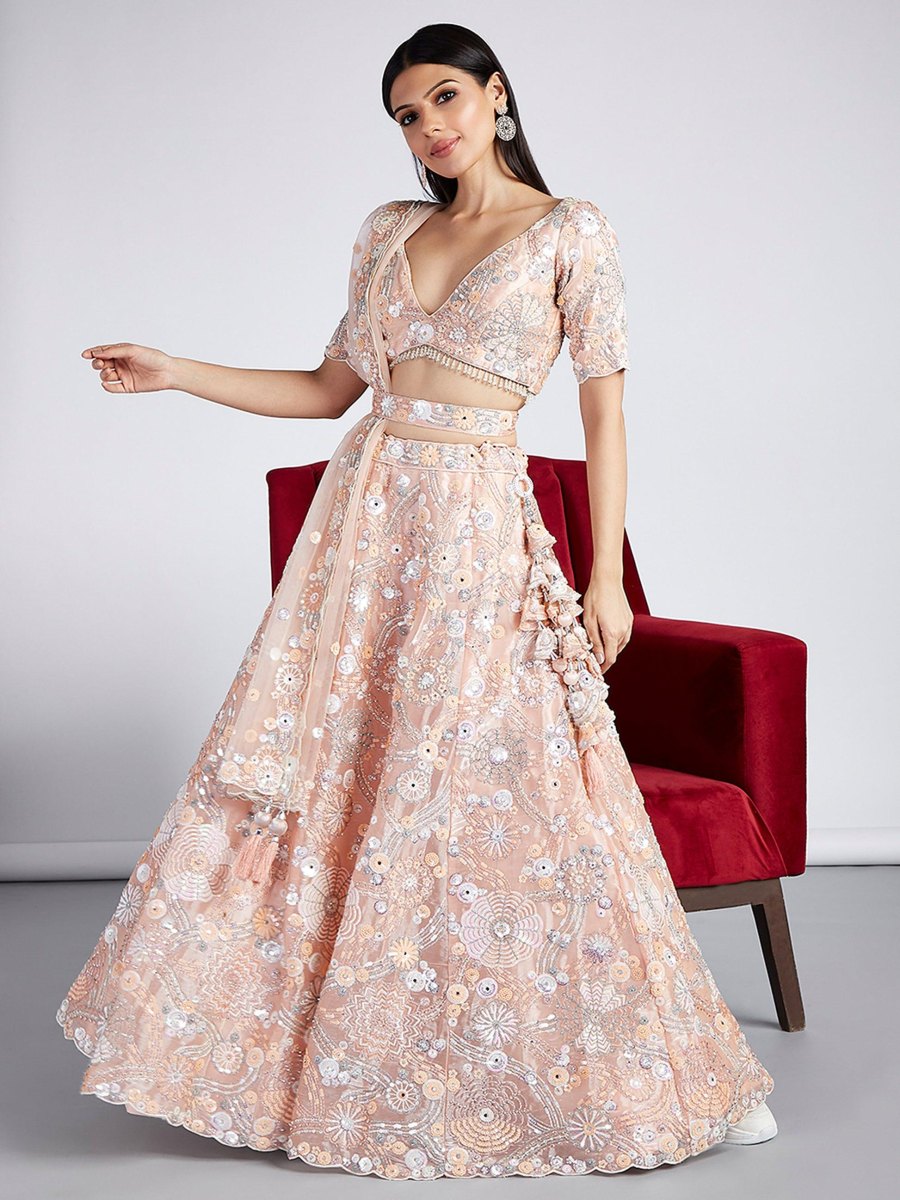
When a wedding takes place in warm weather, I pay attention to fabric before I think about accessories. A lightweight organza lehenga can create an airy, floating silhouette, particularly when the skirt has carefully placed layers and the blouse is not too heavily lined. Peach, mint, powder blue and soft yellow are lovely colour choices for daytime celebrations.
Organza holds its shape, which gives it that characteristic structured volume, but it is not automatically cool or comfortable. The lining, construction and number of layers matter. If the outfit will be worn outdoors, try it on in conditions similar to those expected at the event and check whether you can sit, walk and move your arms without feeling restricted.
I live in Arizona, where I have seen how quickly a sunny outdoor occasion can become uncomfortable. If the wedding is in a hot climate, follow the host's guidance about the venue and timing, drink water and plan for shade where appropriate. Formal clothes do not make extreme heat any less serious. For a summer guest outfit, I would choose breathable construction, stable footwear and a manageable dupatta over heavy layers that look impressive but are exhausting to wear. Lightness should be practical as well as beautiful.
Wine and Burgundy Lehenga for a Winter Wedding
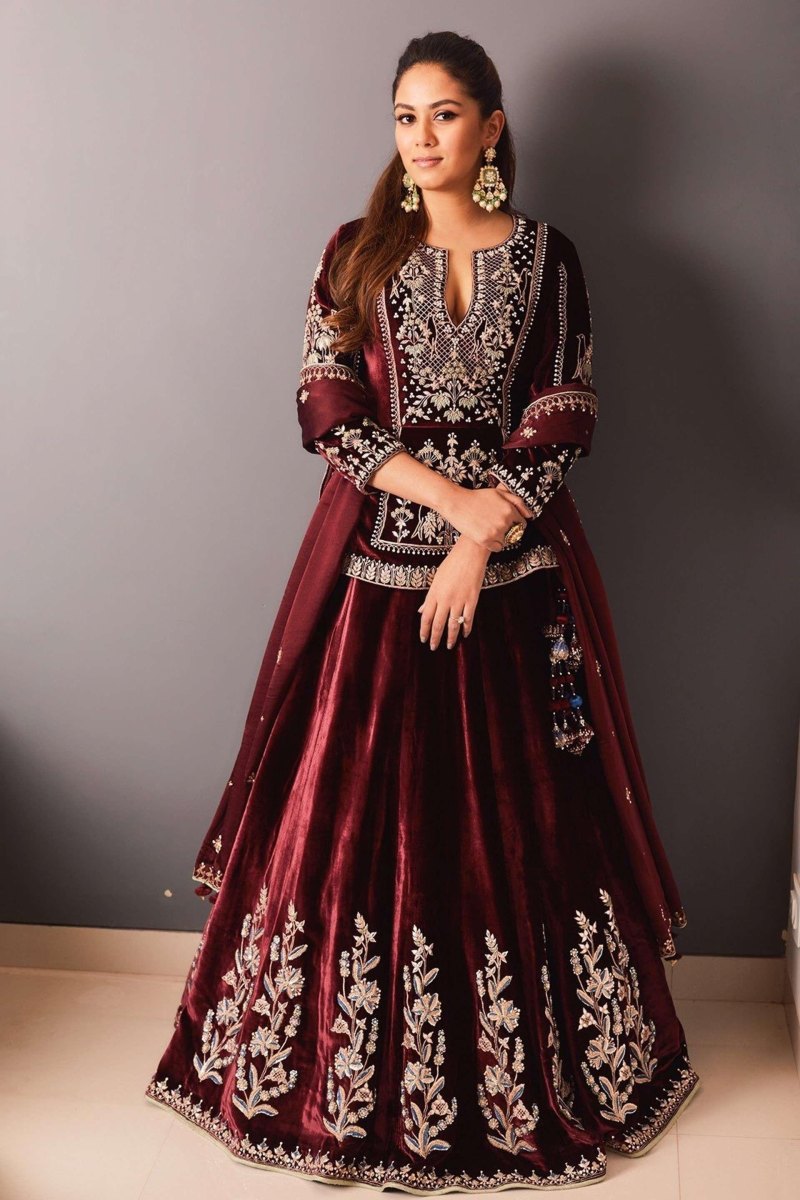
Wine and burgundy are excellent choices for a winter wedding or formal evening reception. Their deep red and berry undertones feel rich without requiring a bright colour, and they pair naturally with antique gold, champagne and some silver finishes. I particularly like these shades in velvet, satin silk or layered net when the fabric weight suits the weather.
For a balanced guest outfit, I would choose one dominant deep shade and let the texture provide interest. A burgundy skirt with gold embroidery can be styled with traditional jewellery, while a cooler wine tone with silver detailing feels more contemporary. A fitted blouse with sleeves may add warmth, but the lining should still allow comfortable movement.
There is no need to assume that winter automatically requires a heavy outfit. An indoor venue may be warm, and a lightweight skirt in a deep colour can be just as effective. Consider a coordinated shawl or wrap if the event involves an outdoor arrival or photographs. Keep the dupatta secure and choose footwear you can manage on the venue's flooring. Depth of colour creates its own drama; the rest of the outfit can be edited accordingly. Wine and burgundy continue to be strong options for reception and winter styling (wine and burgundy lehenga styling).
Mirror-Embellished Pastel Lehenga for a Sangeet Night
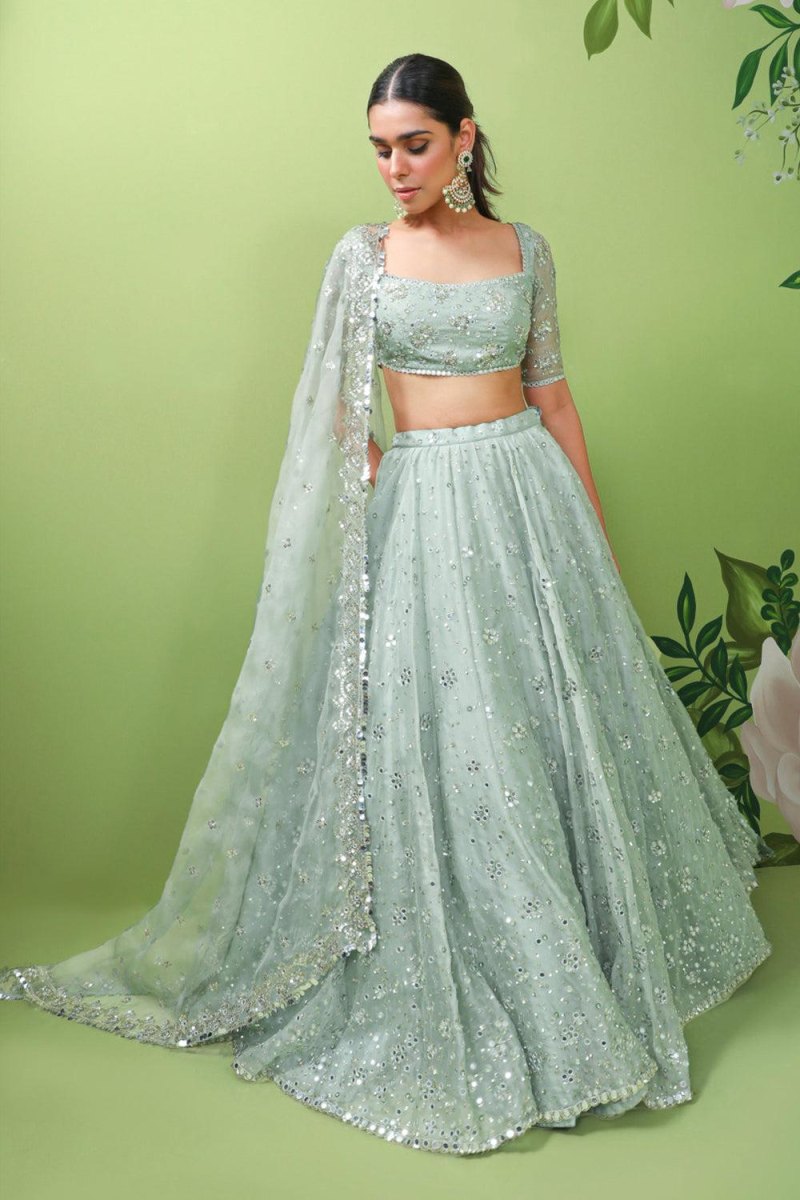
A pastel lehenga with mirror embellishment combines softness with enough shine to suit a lively sangeet. Mint, blush, lilac and powder blue all work well, especially when small mirrors are arranged alongside embroidery or sequins. The overall effect is festive without relying on a very dark or heavily layered outfit.
For this look, I would focus on movement-friendly construction. Sangeet celebrations often involve standing, dancing and moving between groups of guests, so a skirt that allows a full step and a comfortable blouse are essential. Secure the dupatta with discreet pins or choose a drape that stays in place when you move.
Let the mirror work determine the jewellery. A pair of statement earrings may be sufficient if the blouse and skirt are already detailed. If you prefer a necklace, check that it sits comfortably against the neckline and does not compete with the embellishment. A metallic clutch and stable heels or embellished flats finish the outfit neatly. I would rather see a guest dancing happily in a well-fitted lehenga than holding her skirt in place all evening. Festive sparkle should never come at the expense of comfort.
Minimalist Monochrome Lehenga for Modern Elegance
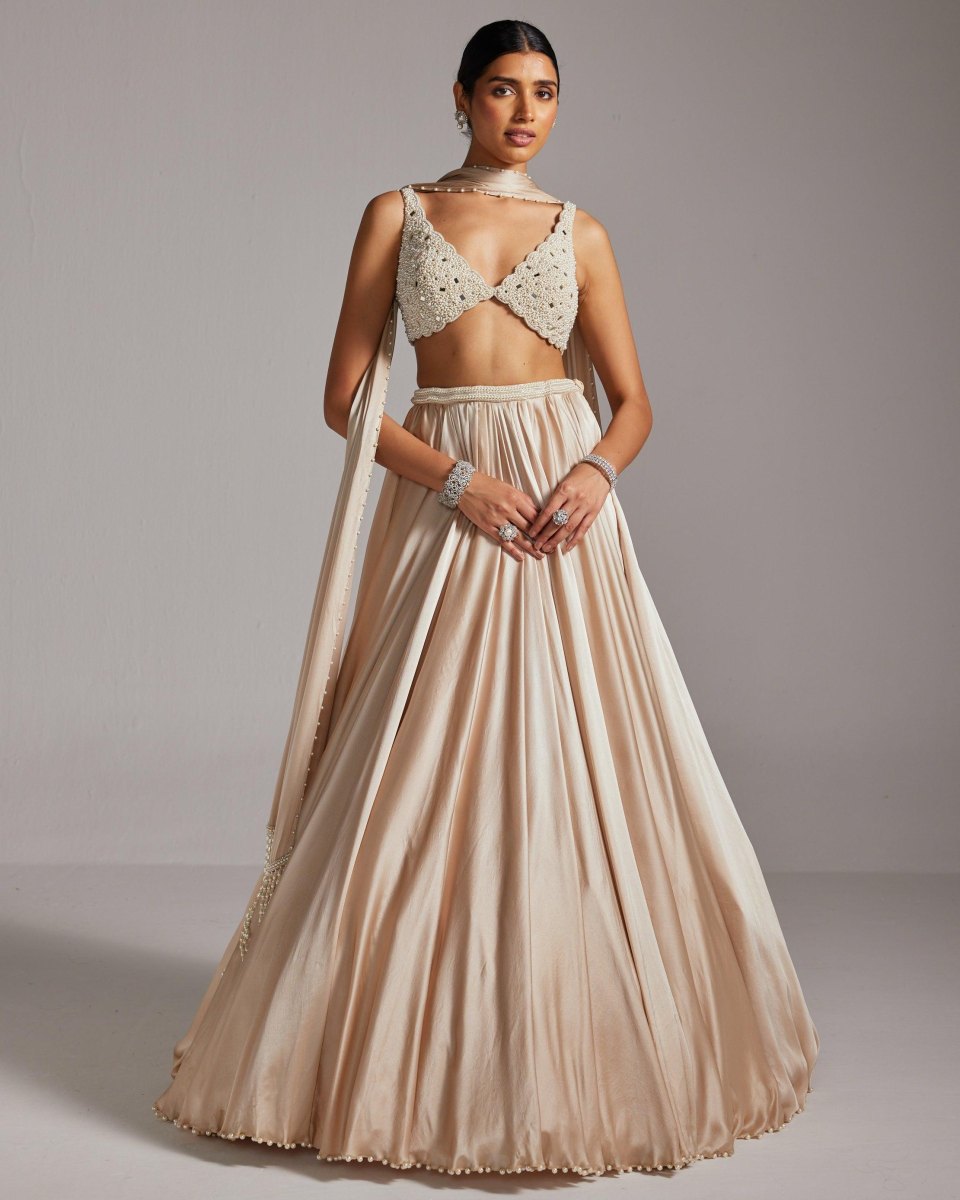
A monochrome lehenga proves that a wedding guest outfit does not need elaborate embroidery to feel special. A coordinated beige, champagne, taupe or soft blush set can look polished through the interplay of texture, shape and precise tailoring. I particularly like tone-on-tone embroidery, clean necklines and a skirt with enough movement to feel festive without becoming cumbersome.
With a minimalist outfit, the fit and fabric become the main event. Look closely at the waistband, blouse seams, lining and hem. A well-cut blouse and an evenly falling skirt can make a simple ensemble look far more considered than an outfit covered in embellishment. If you want additional interest, choose one detail, such as sculptural earrings, a contrasting dupatta or an unusual sleeve shape.
Before wearing ivory or pale champagne, check whether those shades are acceptable for the particular wedding. A monochrome palette does not remove the need to respect the couple's preferences. For accessories, choose a single metallic family and keep the bag compact. I find this style especially useful for guests who want to rewear the individual pieces for other celebrations. Versatility is a genuine wardrobe advantage, not a compromise on elegance.
Sharara-Style Lehenga for a Contemporary Twist
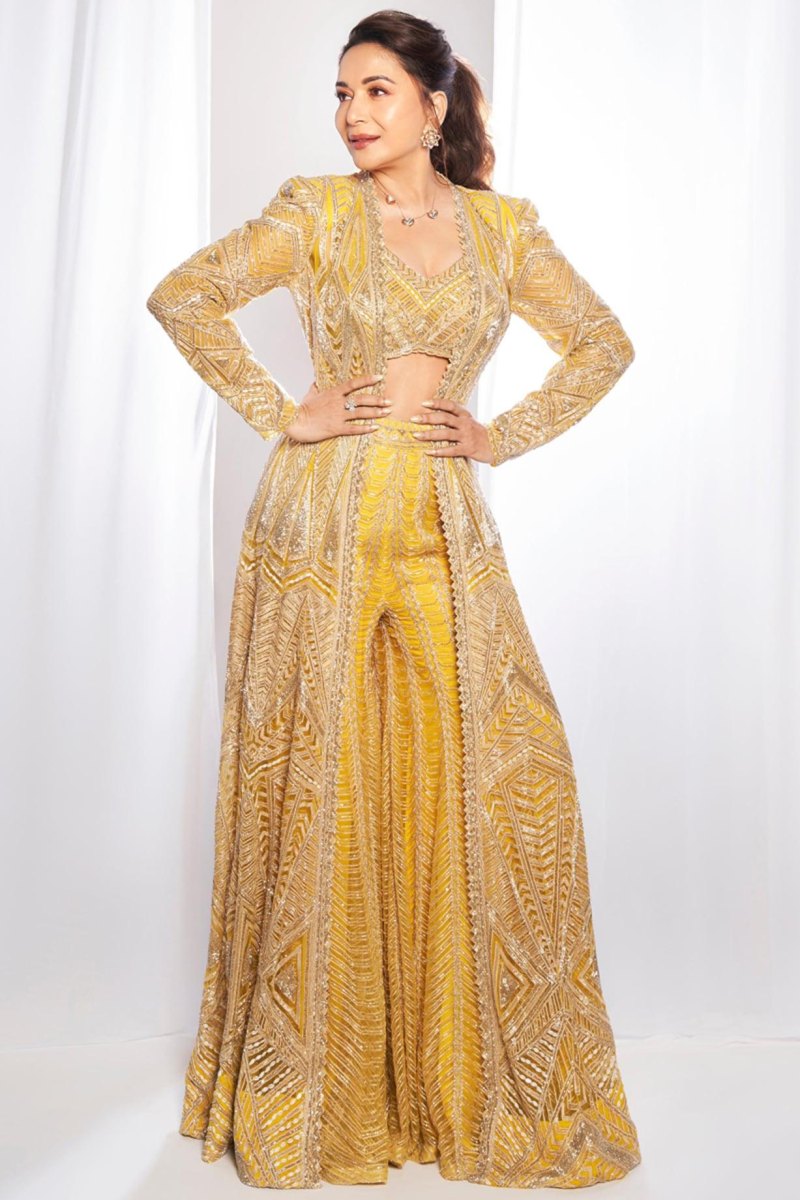
If you love the festive look of a lehenga but want a slightly different silhouette, a sharara-style ensemble is worth considering. Wide, flared trousers create movement similar to a full skirt, while a kurta or short embellished top gives the outfit a distinctive Indo-Western character. This can be a comfortable choice for a guest attending several functions over a wedding weekend.
I would look for a clearly defined flare and a balanced top. A shorter kurta can show the shape of the trousers, while a longer top creates a more fluid line. Georgette, organza and other draping fabrics can work well, provided the construction does not become too stiff or heavy. The aim is to retain the celebratory feeling of traditional occasionwear without making the outfit difficult to move in.
For jewellery, jhumkas and a bracelet are a reliable starting point. A statement necklace may work with a simple neckline, but it is not essential if the top is already decorated. Choose embellished flats or block heels that do not catch on the hem, and test the full outfit while walking and sitting. Ease and personality can coexist; the contemporary silhouette is what makes this look feel fresh. Sharara sets are also frequently styled for mehndi, engagement and sangeet functions (sharara versus lehenga styling).
Cape-Style Lehenga for a Fashion-Forward Wedding Look
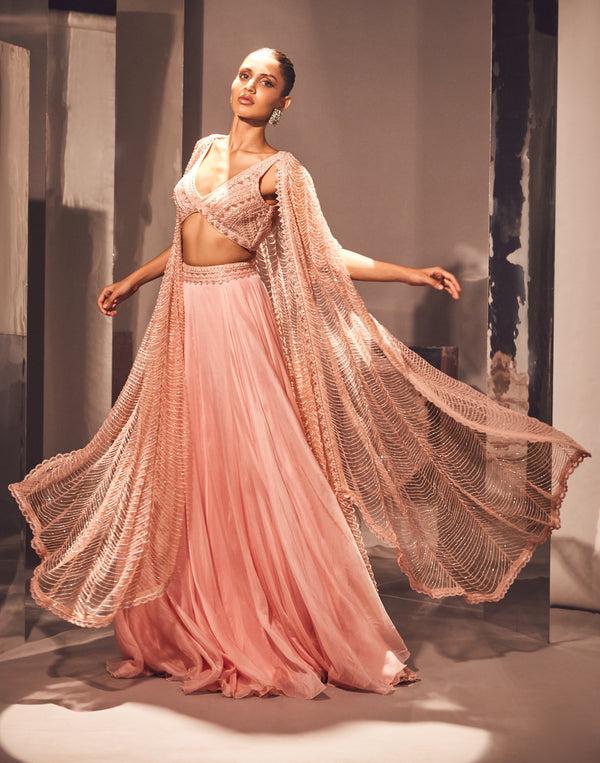
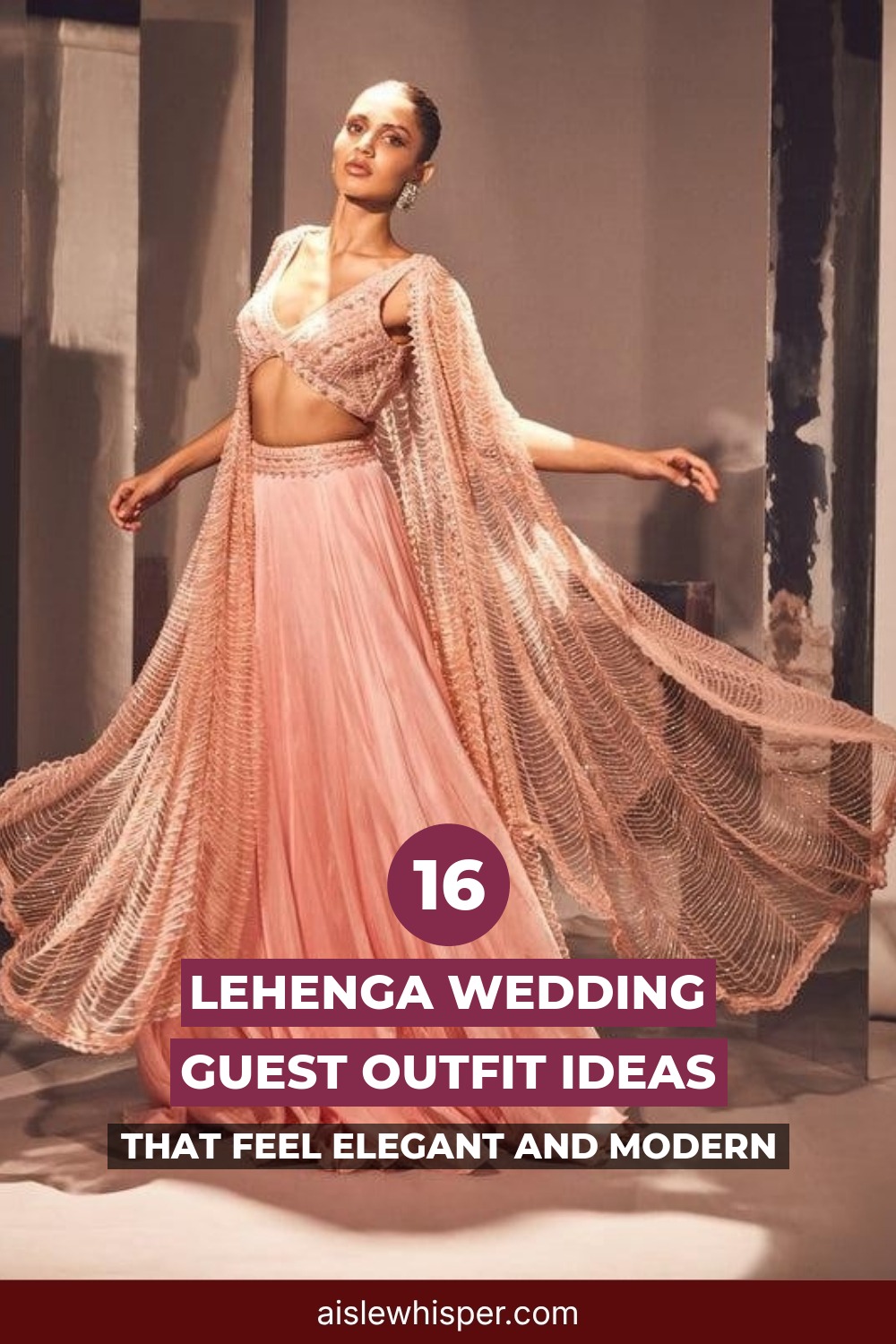
A cape-style lehenga brings a modern silhouette to traditional festive dressing. A sheer cape layered over a fitted blouse and flared skirt creates movement around the shoulders and arms, making it a useful option for guests who want something distinctive without relying entirely on heavy embroidery. The cape can be embellished, softly pleated or almost transparent, depending on the mood of the event.
I would let the cape provide the statement. If it has sequins or intricate embroidery, keep the skirt and blouse relatively streamlined. If the cape is plain, a more detailed skirt can create a balanced outfit. Pay particular attention to how the cape attaches at the shoulders and whether it restricts your arms when greeting people, carrying a bag or dancing.
Choose earrings that complement the neckline and avoid a bulky necklace if the cape already frames the face. A small structured clutch and footwear matched to the skirt length finish the outfit. During your fitting, practise sitting down and turning around; flowing layers can behave differently in real movement than they do in a mirror. A little drama works best when it is easy to wear. This is the outfit I would consider for a reception or evening celebration where the dress code welcomes contemporary occasionwear.
More Pinterest Visuals



 Wedding Decor7 Cheap DIY Wedding Decor Ideas That Look Beautiful Without the Big Budget
 Wedding Planning12 Micro Wedding Venue Ideas For An Intimate
 Wedding Guest Outfits14 Burgundy Wedding Guest Dress Ideas for an Elegant, Unforgettable Look
 Wedding Decor12 Wedding Photo Display Ideas That Turn Your Memories Into Beautiful Decor